
What Business Owners Need to Know About Commercial Refrigeration
Commercial refrigeration basics for business owners come down to a few core ideas: keep food at safe temperatures, maintain your equipment regularly, and choose the right system for your specific operation. Here's a quick overview:
- Safe temperature range: Keep refrigerators between 34°F and 40°F, and freezers at 0°F to -10°F
- Core components: Every system runs on a compressor, condenser, expansion valve, and evaporator
- Main system types: Reach-in coolers, walk-in coolers and freezers, display cases, and prep tables
- Key maintenance tasks: Clean condenser coils monthly, inspect door gaskets regularly, and log temperatures daily
- Biggest risk: Neglected systems lead to product spoilage, health code violations, and costly emergency repairs
Walk into any restaurant, grocery store, or convenience shop, and there's one thing quietly holding everything together — the refrigeration system. Most business owners don't think about it until something goes wrong. And when it does go wrong, it goes wrong fast: spoiled inventory, failed health inspections, and emergency service calls that can run into the hundreds of dollars.
The truth is, a basic understanding of how commercial refrigeration works — and how to keep it running — can protect your products, your customers, and your bottom line. Whether you're opening a new location or managing an existing one, knowing what to watch for makes a real difference.
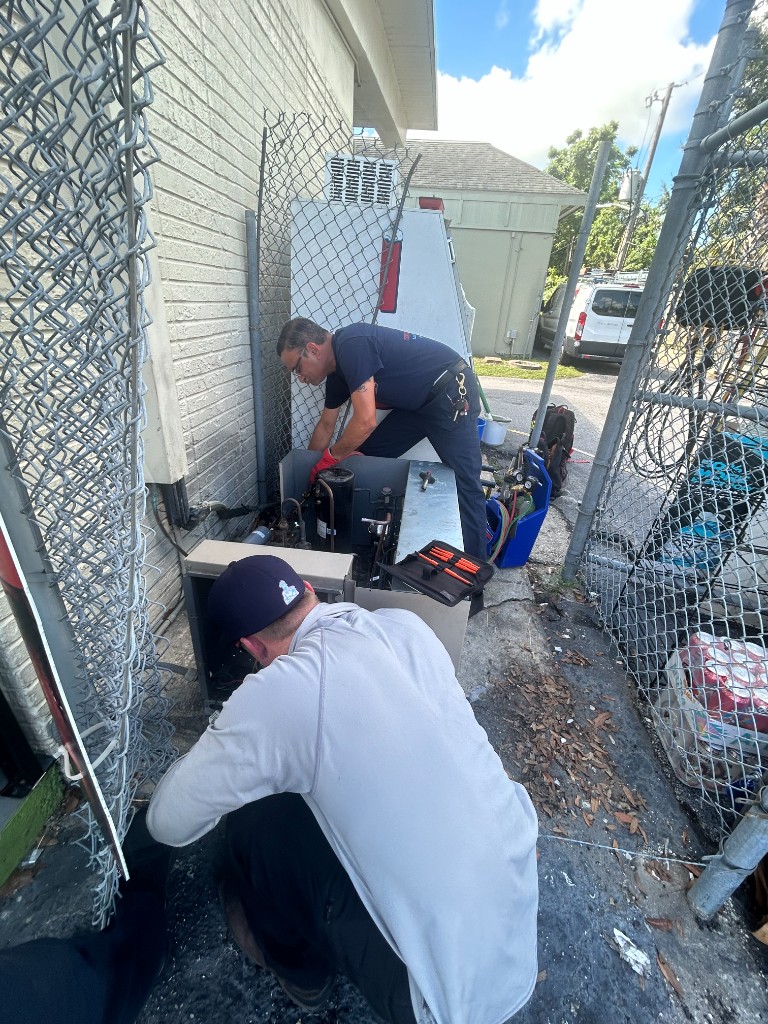
I'm Billy Gregus, owner of Integrity Refrigeration & AC, and I've spent years helping business owners in Polk County navigate the fundamentals of commercial refrigeration basics for business owners — from choosing the right equipment to preventing costly breakdowns before they happen. In this guide, I'll walk you through everything you need to know to keep your cool.

For any business in the food or medical industry, refrigeration is the backbone of your operation. It isn't just about "keeping things cold"; it’s about perishable preservation. When a system fails, you aren't just losing a piece of equipment; you are losing thousands of dollars in inventory. Understanding the significance of commercial refrigeration for businesses is the first step toward long-term profitability.
Beyond inventory, there is the matter of health code compliance. In April 2026, regulators are more stringent than ever. Most food products must be held at 41°F or below to prevent the growth of harmful microorganisms. If your unit fluctuates, you risk ensuring food safety through proper commercial refrigeration installation.
Then, there’s the financial side: energy cost management. Commercial units run 24/7, 365 days a year. They follow the Second Law of Thermodynamics, which essentially means heat naturally moves toward cold. Your refrigerator’s job is to "pump" that heat out. If the system is inefficient, your power bills will skyrocket. With the 2026 efficiency standards now in full swing, using modern, energy-efficient compressors can reduce consumption by up to 30%.
Main Types of Commercial Refrigeration Systems
Choosing the right hardware is a "measure twice, cut once" scenario. You need to match the equipment to your specific workflow. Here are the heavy hitters:
- Reach-in Units: These are the vertical "closet" style fridges you see in most kitchens. They are great for quick access but have limited capacity.
- Walk-in Coolers and Freezers: These are insulated rooms. They provide massive storage but require more space and professional commercial refrigeration installation in Winter Haven, FL.
- Display Cases: Essential for retail, these use glass doors or open fronts to show off products while maintaining a curtain of cold air.
- Prep Tables: These combine storage with a workspace, keeping ingredients at arm's reach for sandwich or pizza assembly.
- Blast Chillers: Designed to bring hot food down to safe temperatures rapidly, preventing bacterial growth.
Reach-in vs. Walk-in: A Quick Comparison
| Feature | Reach-in Units | Walk-in Coolers/Freezers |
|---|---|---|
| Typical Capacity | 20 – 80 cubic feet | 200 – 2,000+ cubic feet |
| Best For | Frequent access, tight spaces | Bulk storage, high-volume prep |
| Installation | Mostly "Plug and Play" | Requires professional assembly |
| Footprint | Small | Large (requires dedicated floor space) |
Choosing Systems: Commercial Refrigeration Basics for Business Owners
When selecting a unit, don't just look at the price tag. Consider your storage profile. Are you storing raw proteins that need strict 34°F environments, or bottled drinks that are more forgiving? Our commercial refrigeration installation Lakeland guide emphasizes that usable space is often different from "advertised cubic footage." Shelving and airflow take up room!
Always look for Energy Star ratings and check the climate class. A fridge designed for a 75°F dining room will fail miserably in a 100°F Florida kitchen. If you are in smaller areas, check out our Dundee installation guide for tips on maximizing small-footprint efficiency.
Specific Considerations for Walk-ins and Display Cases
Walk-ins are a different beast. To prevent spoilage, you want to stay in the 34°F to 40°F range. Any lower and you risk freezing dairy; any higher and you enter the "danger zone" for bacteria. Maintaining 85% humidity is also key to preventing produce from drying out.
For display cases, details matter. Use strip curtains on walk-in doors to keep the cold in when staff enter. Check door gaskets monthly—a torn seal is like leaving a window open with the AC on. Modern systems also benefit from LED lighting, which provides better visibility without adding heat to the cabinet. If you're in Bartow, our installation guide for Bartow, FL covers these hardware specifics in detail. Don't forget that specialized equipment like reach-in freezers requires specific service to handle the deeper temperature drops.
Core Components and the Cooling Cycle
To understand commercial refrigeration basics for business owners, you have to understand the "Vapor-Compression Cycle." It’s essentially a loop where a chemical (refrigerant) carries heat away from your food.
- The Compressor: The "heart" of the system. It squeezes the refrigerant, turning it into a high-pressure, hot gas.
- The Condenser Coils: Located outside the cooled space, these coils release the heat into the room or alleyway. This is why the back of a fridge feels warm.
- The Expansion Valve: This acts like a nozzle, spraying the high-pressure liquid into a low-pressure area, which causes it to turn ice-cold.
- The Evaporator: These coils are inside the unit. Fans blow air across them, and the cold refrigerant absorbs the heat from your food.
The technology of modern refrigeration repair has advanced significantly. In 2026, we see a huge shift toward R-290 (Propane) and CO2 refrigerants. These are much better for the environment and often more efficient than the older chemicals we used to use. If you are in Lake Alfred and notice your cycle is running constantly without cooling, refer to our Lake Alfred repair guide to troubleshoot these specific components.
Essential Maintenance and Efficiency Practices
Maintenance is the difference between a system that lasts 15 years and one that dies in five. Implementing maintenance tips for Winter Haven, FL can save you a fortune.
The #1 task? Coil cleaning. If your condenser coils are covered in dust or grease, the compressor has to work twice as hard to reject heat. This leads to "burnout." We also recommend checking gasket integrity. If you can slide a dollar bill through a closed door, you’re losing money.
Airflow optimization is another big one. Don't stack boxes right up against the evaporator fans. The cold air needs to circulate to keep temperatures even. If you're in Auburndale, following our Auburndale maintenance tips can help you maximize energy efficiency and keep those utility bills under control.
Maintenance Routines: Commercial Refrigeration Basics for Business Owners
Consistency is key. Here is a baseline schedule:
- Daily: Check and log temperatures. This helps you spot a "slow fail" before it becomes a crisis.
- Monthly: Vacuum the condenser coils and check for ice buildup on the evaporator.
- Quarterly: Have a pro come in. Regular refrigeration service can identify small leaks or failing motors early.
Knowing when to call a professional in Winter Haven is vital. A $15-a-month time investment in cleaning can prevent an $800 to $1,000 emergency service call. If you do run into trouble, there are some quick fixes for refrigeration problems you can try, but never mess with the refrigerant lines yourself.
Frequently Asked Questions about Commercial Refrigeration
What is the ideal temperature for a commercial cooler?
For most food safety applications, the "sweet spot" is 34°F to 40°F. This keeps you safely below the 41°F bacterial growth threshold while ensuring you don't accidentally freeze sensitive items like lettuce or milk. If your unit can't hold this range, you may need commercial refrigeration repair in Winter Haven.
How often should I clean my condenser coils?
At a minimum, once a month. However, if your unit is in a greasy kitchen (near fryers) or a dusty warehouse, you might need to do it every two weeks. Our Haines City repair tips go into detail on how to safely vacuum these without bending the delicate fins.
When should I repair vs. replace my refrigeration unit?
We suggest the 50% rule: if the repair cost is more than 50% of the price of a new, more efficient unit, it’s time to replace it. Also, consider the age. Most commercial units last 10-15 years. If your unit is 12 years old and needs a new compressor, replacing it is usually the smarter move. There are many reasons not to delay calling a repairman, as a small fix today prevents a total replacement tomorrow.
Conclusion
Mastering commercial refrigeration basics for business owners doesn't mean you need to be a mechanic. It means being a proactive owner who understands that cold storage is a vital asset. By choosing the right equipment, keeping your coils clean, and monitoring your temperatures, you ensure your business stays profitable and compliant.
At Integrity Refrigeration & AC, we are proud to serve Winter Haven and the surrounding Polk County area, including Eagle Lake, Bartow, Lakeland, and Haines City. We know that new equipment is a big investment, which is why we offer flexible refrigeration financing options to help you get the gear you need without the upfront stress.
Whether you need a new installation or a refrigeration service in Auburndale, FL, we are here to help you keep your cool. Give us a call today and let's make sure your business stays frosty!