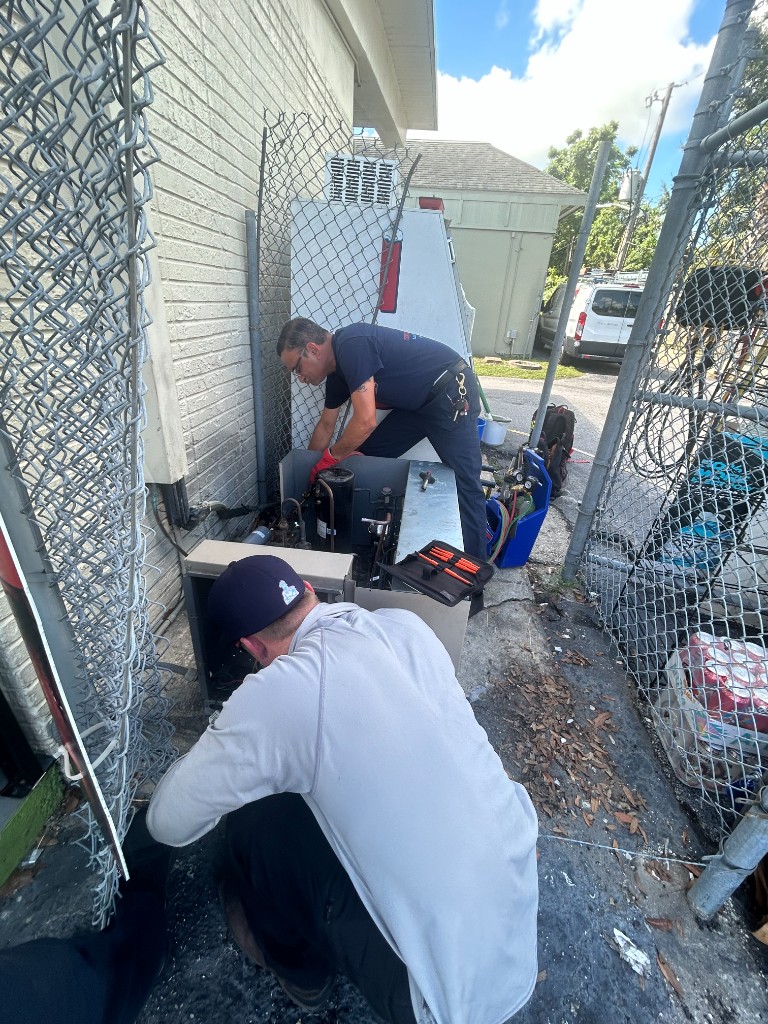

Why Fall Is the Best Time to Service Your Commercial Refrigeration System
Commercial refrigeration fall maintenance tips every restaurant, grocery store, and food service facility in Polk County, FL should follow this season:
- Log temperatures daily and make sure all units hold at or below 41°F for food safety
- Inspect door gaskets weekly using the dollar-bill test — if it slides out easily, the seal needs replacing
- Clean condenser coils every 30 to 90 days to prevent a 25% spike in energy costs
- Clear drain pans and lines monthly to stop sludge buildup, foul odors, and freeze-ups
- Check airflow around and inside units — leave 3 to 4 inches between product and walls or fans
- Schedule a professional inspection before winter demand peaks, covering refrigerant levels, electrical connections, and compressor performance
- Avoid overloading units — stacking product to the ceiling blocks airflow and accelerates wear
Fall is a window most commercial facilities overlook. Your refrigeration equipment has been running hard through the heat of a Florida summer, and the cooler months ahead bring a real opportunity to catch small problems before they turn into expensive emergencies. A prep table running slightly warm or a reach-in with a worn gasket might not seem urgent today — but neglected, those issues can mean spoiled inventory, failed health inspections, and repair bills that are three to five times higher than what a routine service visit would have cost. Properly maintained systems use up to 20% less energy, and regular care can extend equipment life by five to ten years. The math is straightforward: fall maintenance pays for itself.
I'm Billy Gregus, owner of Integrity Refrigeration & AC, and with years of hands-on experience helping businesses across Winter Haven and Polk County stay ahead of refrigeration problems, I know how much these commercial refrigeration fall maintenance tips can save you in downtime, product loss, and emergency repairs. Let's walk through exactly what your team should be doing this season.

Why Fall is the Ideal Season for Refrigeration Service
As we move into April 2026, many business owners in Winter Haven and Lakeland are breathing a sigh of relief as the most intense summer humidity begins to dip. However, this is exactly when your refrigeration system is most vulnerable. After months of battling the Florida heat, components like compressors and fan motors have undergone significant stress. Fall provides a critical "breather" period to reset your equipment before the holiday rush and the subtle shifts in ambient temperatures affect system pressures.
Temperature fluctuations during the transition into fall can play tricks on your thermostats and sensors. If your system isn't calibrated, it may run longer than necessary, driving up utility bills. By focusing on Refrigeration Service Tips to Save Money and Extend Equipment Life, you ensure your system recovers from the peak summer load.
Furthermore, while we don't face harsh winters in Polk County, the shift in building heating loads can change how heat is dissipated from your self-contained units. Ensuring your system is reliable now means you won't be dealing with a catastrophic walk-in failure when your inventory is at its highest volume for the end-of-year season. Statistics show that properly maintained systems use 20% less energy—a saving that goes straight to your bottom line.
Maintaining a commercial kitchen or grocery aisle is a game of inches. One of the most common commercial refrigeration fall maintenance tips we share with our clients in Auburndale and Haines City is to look at the "big picture" of the facility. Is your equipment placed in a way that allows it to breathe?
Airflow and Inventory Management
A refrigerator is essentially an airflow machine. If you block the vents, the evaporator coil will eventually freeze over, leading to water leaks and rising cabinet temperatures. We recommend leaving at least 3 to 4 inches of clearance between your products and the interior walls. When you stack boxes to the ceiling, you kill the circulation, forcing the compressor to work double-time.
Using Technology to Your Advantage
In 2026, many savvy managers are using CMMS (Computerized Maintenance Management System) software or simple digital tracking tools to stay organized. These tools can send alerts when it’s time to clean a coil or check a gasket. If you aren't using software, a simple paper log is better than nothing. Tracking your maintenance helps you spot patterns—if a specific reach-in keeps blowing a fuse, you’ll have the data to decide whether to repair or replace it.
For more localized advice, check out these 5 Tips to Maintain Your Commercial Refrigeration in Winter Haven, FL.
Common Fall Maintenance Mistakes
The biggest mistake? Skipping the routine because "everything seems fine." Most refrigeration failures are the final stage of long-term neglect. Other mistakes include:
- Using abrasive chemicals on stainless steel or gaskets.
- Ignoring a "slight" rattling sound (which usually indicates a loose fan blade or failing motor).
- Overloading units during holiday prep, which blocks the very airflow needed to keep food safe.
Daily and Weekly Commercial Refrigeration Fall Maintenance Tips
Consistency is the secret to equipment longevity. You don't need a degree in engineering to perform these high-impact daily and weekly tasks.
- Temperature Logging: Check your thermometers at least twice a shift. For food safety, TCS (Time/Temperature Control for Safety) foods must stay at 41°F or below. If you see a unit hovering at 43°F, don't wait—it’s already a red flag. Learn more about this in our guide on Ensuring Food Safety: A Complete Guide to Refrigeration Maintenance.
- The Dollar-Bill Test: This is our favorite "pro trick." Close the refrigerator door on a dollar bill so that half is sticking out. If you can pull the bill out with no resistance, your gasket is worn or the door is misaligned. A leaky gasket lets in warm, moist air, leading to frost buildup and wasted energy.
- Surface Cleaning: Use warm water and a mild vinegar solution to wipe down the interior and exterior. Avoid bleach, as it can crack the plastic of the door seals over time.
- Door Closure Checks: Ensure doors are closing and sealing automatically. In a busy kitchen, hinges can get knocked out of alignment, leaving a tiny gap that bleeds cold air all night long.
When to Schedule Professional Commercial Refrigeration Fall Maintenance Tips
While your staff can handle the cleaning, some tasks require an EPA 608 certified technician. Handling refrigerants without a license isn't just dangerous—it can lead to EPA fines of up to $37,500 per day. Professional service is about looking at the things you can't see.
When we visit a site in Bartow or Lake Wales, we perform a deep dive into the system's vitals. This includes checking the compressor’s amp draw to ensure it isn't pulling too much power (a sign of impending failure) and calibrating thermostats to ensure the digital readout matches the actual internal temperature.
In-House vs. Professional Tasks
| Task | Staff (In-House) | Professional Technician |
|---|---|---|
| Daily Temp Logging | X | |
| Weekly Gasket Cleaning | X | |
| Monthly Coil Brushing | X | |
| Refrigerant Leak Detection | X | |
| Electrical Connection Tightening | X | |
| Compressor Amp Draw Testing | X | |
| Defrost Cycle Calibration | X | |
| Deep Chemical Coil Cleaning | X |
If you're unsure who to call, our Expert Guide to Choosing the Right Commercial Refrigeration Services can help you vet the right partner for your business.
Cleaning and Inspecting Critical System Components
If there is one thing that causes 40% of all emergency service calls, it’s a dirty condenser coil.
The Condenser Coil
The condenser coil is responsible for shedding the heat removed from the inside of your refrigerator. If it’s covered in dust, grease, or "kitchen lint," the heat has nowhere to go. This causes the compressor to overheat and eventually fail. We recommend a light brushing or vacuuming every 30 days. For kitchens with fryers, grease buildup is a major threat, and you may need a professional degreasing more frequently. Check out these 10 Tips for Commercial Refrigeration Maintenance in Winter Haven, FL for more on coil care.
The Evaporator Coil
Located inside the unit, the evaporator coil absorbs the heat. It needs to stay clear of ice. If you notice frost on the fins, your defrost cycle might be failing, or you might have a massive air leak from a bad gasket. Never use a knife or ice pick to scrape frost off an evaporator coil—you will puncture the line and release the refrigerant, which is an expensive mistake.
Drains and Pans
Sludge and "slime" can grow in the dark, damp environment of your drain lines. If the line clogs, water will back up into the unit, causing puddles on the floor (a slip hazard!) or even freezing the evaporator into a solid block of ice. Flushing the lines with warm water monthly can prevent this.
For a deeper look at keeping your system running smoothly, read Don't Sweat It: 10 Tips for Keeping Your Refrigeration System in Top Shape.
Frequently Asked Questions About Commercial Refrigeration
What are the warning signs that my system needs professional attention?
Don't wait for the unit to stop cooling entirely. Watch for these "early warning" signals:
- Unusual Noises: Squealing, grinding, or loud clicking often points to failing motors or relays.
- Excessive Frost: If your walk-in looks like a winter wonderland, you have an airflow or sealing issue.
- Water Leakage: Puddles inside or outside the unit mean the drainage system is failing.
- Spiking Energy Bills: If your usage jumps without a change in production, your compressor is likely struggling.
- Temperature Fluctuations: If the unit is "hunting" for the right temperature, the sensors or controls need calibration.
If you see these signs, our Commercial Refrigeration Services Winter Haven, FL page offers a quick way to get expert help.
How often should air filters and coils be cleaned?
As a rule of thumb, every 30 to 90 days. However, if your facility is in a high-dust area or near a busy road in Davenport or Polk City, you might need to check them every month. Clean filters and coils improve airflow efficiency by up to 15%, directly impacting the lifespan of your expensive components.
How does fall maintenance reduce winter operational costs?
When your system is clean and calibrated, the compressor doesn't have to work as hard to maintain setpoints. This reduces "cycling," which is where most wear and tear (and energy spikes) occurs. By ensuring heat exchange efficiency now, you avoid the 25% energy cost increase associated with dirty coils. Plus, avoiding just one emergency repair during the busy holiday season can save you thousands in labor and lost product.
Conclusion
At Integrity Refrigeration & AC, we understand that your refrigeration equipment is the heartbeat of your business. Whether you are running a restaurant in Winter Haven, a grocery store in Lake Wales, or a convenience store in Haines City, you can't afford to let maintenance slide.
Our mission is to provide top-tier refrigeration care across all of Polk County, including Eagle Lake, Lakeland, and Lake Alfred. We know that unexpected repairs can be a burden, which is why we offer flexible financing options to make sure your equipment gets the service it needs without straining your cash flow.
Being proactive is always cheaper than being reactive. Don't wait for the "CL" warning light or a puddle on the floor to call for help. Protect your investment with a professional maintenance plan today by visiting our maintenance plan page. Let us help you keep your cool this fall and for years to come!