
The Commercial Refrigeration Reliability and Food Safety Connection
The commercial refrigeration reliability and food safety connection is straightforward: when your refrigeration system holds the right temperature consistently, harmful bacteria cannot multiply fast enough to make people sick — and your inventory stays protected. When it fails, even briefly, the risks escalate fast.
Here is a quick summary of how reliable refrigeration protects food safety:
- Temperature control: Keeping food at or below 41°F (5°C) slows bacterial growth from pathogens like Salmonella, E. coli, and Listeria
- Consistent performance: Stable temperatures prevent the brief fluctuations that silently shorten shelf life and create hidden spoilage
- Equipment reliability: Well-maintained units recover quickly after door openings, restocking, and busy service periods
- Hygiene and organization: Clean interiors and proper food storage reduce cross-contamination risk independent of temperature
- Monitoring and documentation: Real-time temperature logs support health code compliance and catch problems before they become crises
- Timely maintenance: Regular servicing prevents the slow equipment decline that puts food safety at risk before a full breakdown ever occurs
In a commercial kitchen, refrigeration is not background equipment — it is the front line of food safety. Research from the University of Veterinary Medicine, Vienna found that potentially pathogenic bacteria were detected in 60 percent of refrigerators examined, and only 38 percent were operating below the recommended threshold of 5°C. Those are not edge-case numbers. They reflect what happens in real-world operations when equipment reliability and hygiene practices fall short.
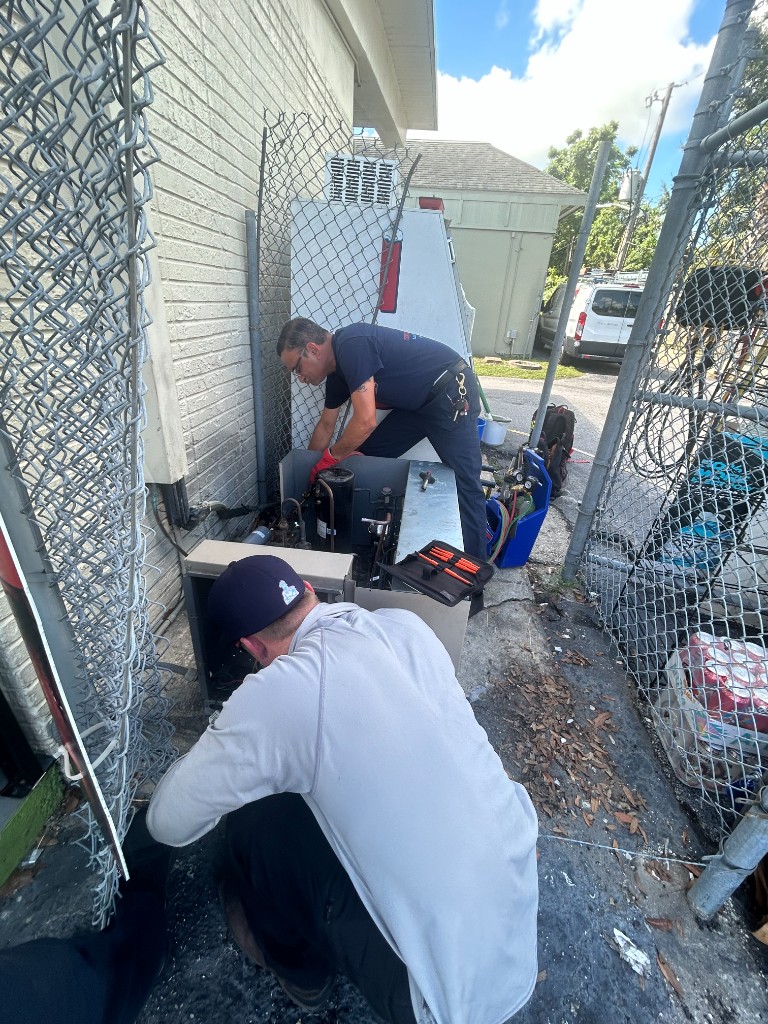
I'm Billy Gregus, owner of Integrity Refrigeration & AC, and I've spent years working hands-on with commercial refrigeration systems across Polk County, FL — seeing how the commercial refrigeration reliability and food safety connection plays out when equipment is well-maintained versus neglected. Let's walk through everything you need to know to keep your system reliable, your food safe, and your business protected.

How Reliable Cooling Prevents Foodborne Illness
When we talk about food safety, we are really talking about a race against time and biology. Pathogenic bacteria like Salmonella, E. coli, and Listeria are invisible hitchhikers that don't need an invitation to ruin your day. If you give them just two hours at room temperature, they will multiply on a slice of pizza or a tray of raw chicken until they reach dangerous levels.
Reliable refrigeration acts as a shield, slowing down the metabolic processes of these microorganisms. It doesn't kill them—only heat can do that—but it puts them into a "deep sleep" where they can't reproduce quickly. This preservation of quality and safety is why Ensuring Food Safety: A Complete Guide to Refrigeration Maintenance is the most important document in your kitchen's playbook. Without a functioning cooling system, spoilage happens in hours rather than days, leading to massive inventory loss and potential health crises.
Temperature Control and the Commercial Refrigeration Reliability and Food Safety Connection
The "Danger Zone" is a term every food service professional in Winter Haven and Lakeland knows well. This range, between 40°F and 140°F, is where bacteria thrive. To keep food safe, the FDA Food Code requires cold-held perishable items to stay at or below 41°F.
However, "just okay" isn't good enough for a busy restaurant. We recommend tighter ranges to account for door openings:
- Walk-in Coolers: 36°F to 38°F (allowing for a slight rise during heavy use).
- Walk-in Freezers: 0°F to -10°F.
If your unit is struggling to hit these numbers, it's often a sign of mechanical fatigue. A refrigerator that stays at 45°F might "feel" cold, but it is actually a breeding ground for pathogens. Understanding The Importance of Timely Refrigeration Repair means recognizing that even a five-degree difference can double the rate of bacterial growth.
Monitoring Systems: Strengthening the Commercial Refrigeration Reliability and Food Safety Connection
In April 2026, we are seeing more businesses move away from manual temperature logs toward digital sensors. Why? Because a paper log only tells you the temperature at the moment a staff member looked at the dial. It doesn't tell you that the compressor struggled for three hours in the middle of the night.
Smart solutions and automated tracking provide:
- Real-time alerts: You get a notification on your phone the moment a walk-in hits 42°F.
- Compliance documentation: Automated logs are timestamped and tamper-proof, making health inspections in cities like Bartow or Haines City much smoother.
- Predictive insights: These systems can often spot "drift"—a slow climb in average temperature—before the unit actually fails.
By enhancing commercial refrigeration repair with smart solutions, you turn your refrigeration from a passive box into an active guardian of your bottom line.

Maintenance Strategies for Equipment Longevity
Think of your commercial refrigerator like a high-performance engine. It runs 24/7, 365 days a year. If you never changed the oil in your truck, you wouldn't expect it to last, right? The same logic applies here.
Regular maintenance is the only way to ensure the commercial refrigeration reliability and food safety connection remains unbroken. When components get dirty or worn, the system has to work harder, which leads to temperature fluctuations and, eventually, total failure.
Daily, Weekly, and Monthly Maintenance Checklist
To keep your equipment in top shape, we recommend following this schedule:
Daily Tasks:
- Check and record temperatures at least twice a day.
- Ensure airflow isn't blocked by overstocking.
- Clean up any spills immediately to prevent mold and bacterial growth.
- Listen for unusual noises or vibrations.
Weekly Tasks:
- Inspect door gaskets for tears or gaps (a common cause of temperature loss).
- Clean the gaskets with warm, soapy water.
- Check for ice buildup on evaporator coils.
Monthly Tasks:
- Clean the condenser coils: This is non-negotiable. Dust and grease act as insulation, trapping heat and forcing the compressor to overheat.
- Inspect the drain lines for clogs or standing water.
- Verify that all fan blades are spinning freely and are clean.
If you notice any red flags during these checks, don't wait. Reviewing our Top 5 Signs You Need Refrigeration Repair Now can save you from an emergency midnight service call.
Identifying Early Signs of Refrigeration Failure
Most refrigeration systems don't just "die" without warning. They usually give you "whispers" that something is wrong.
- Abnormal Noise: A loud humming or clicking often points to a failing compressor or fan motor.
- Frost Buildup: If you see "snow" inside your reach-in, you likely have a bad seal or a defrost cycle issue.
- Slow Recovery: If the temperature takes an hour to drop back down after a delivery, your system is losing its efficiency.
- Water Pooling: Puddles inside the unit can contaminate food, while water outside is a slip hazard and a sign of a blocked drain.
Understanding the most frequent refrigeration repair issue—which is often neglected cleaning—can help you avoid the "chaos" of a sudden breakdown.
Storage Best Practices and Hygiene Protocols
Even the most reliable refrigerator in Polk County can't protect your customers if the food inside is stored poorly. Hygiene and organization are just as critical as the mechanical side of the commercial refrigeration reliability and food safety connection.
Storage Organization and the Commercial Refrigeration Reliability and Food Safety Connection
How you stack your shelves matters. A commercial refrigerator is an airflow-driven system. If you pack it too tightly, you create "hot spots" where the cold air can't reach, allowing bacteria to multiply even if the thermostat says 38°F.
The Golden Rules of Storage:
- The FIFO Method: First-In, First-Out. Always rotate your stock so the oldest items are used first.
- Raw Meat Placement: Always store raw proteins (chicken, beef, fish) on the lowest shelves. This prevents juices from dripping onto ready-to-eat foods—a major cause of cross-contamination.
- Ready-to-Eat Foods: These should always be on the top shelves, furthest away from potential contaminants.
- Airflow Clearance: Keep at least two inches of space between food containers and the walls of the unit. Never block the evaporator fans.
For businesses in Auburndale or Lake Wales, following these refrigeration maintenance tips ensures that your hygiene standards match your mechanical reliability.
The Business Impact of Refrigeration Performance
Reliable refrigeration isn't just a safety requirement; it's a financial strategy. Cooling energy consumption accounts for roughly 44% of total food service utility costs—the largest share of any source in your building. When your unit is running inefficiently due to dirty coils or bad gaskets, that percentage climbs even higher.
Furthermore, approximately one-third of all food produced globally is wasted, and improper storage is a massive contributor. By maintaining a consistent cold chain, you reduce shrinkage and keep your margins healthy. A high health inspection grade—the "A" in the window—is your best marketing tool, and nothing earns a "C" faster than a refrigerator that can't hold 41°F.
Financial Consequences of Equipment Downtime
When a compressor fails in a restaurant or grocery store, you face three simultaneous crises:
- Inventory Loss: Thousands of dollars in meat, produce, and dairy can go in the trash in just a few hours.
- Emergency Repair Fees: Calling for a technician at 2:00 AM on a Sunday is never cheap.
- Business Interruption: If you can't keep food safe, you can't serve customers.
In some cases, emergency commercial refrigeration installation is the only way to save a business from closing its doors permanently.
Choosing and Installing the Right Refrigeration System
If you are opening a new spot in Winter Haven or Lakeland, or if your current unit is over 10 years old, it might be time for an upgrade. Choosing the right system is about more than just finding a box that fits in the corner.
| Feature | Reach-In Refrigerator | Walk-In Cooler |
|---|---|---|
| Capacity | Best for prep lines and small stock | Best for bulk storage and high volume |
| Organization | Limited; easy to overload | Excellent; allows for shelving units |
| Energy Use | High per cubic foot | Efficient for large volumes |
| Workflow | Point-of-use convenience | Requires trips to the back of house |
Proper sizing in commercial refrigeration installation is vital. An undersized unit will run constantly, leading to early failure, while an oversized unit will short-cycle, wasting energy and failing to remove humidity properly.
Frequently Asked Questions about Refrigeration Safety
How does refrigeration prevent bacterial growth?
Refrigeration works by removing heat from the environment, which slows down the metabolic activity of bacteria. While it doesn't kill the bacteria, it extends the time it takes for them to reach dangerous levels. At temperatures below 41°F, most pathogens grow so slowly that food remains safe for several days.
What are the signs that my commercial refrigerator is failing?
Common signs include rising energy bills, food spoiling before its expiration date, water leaking onto the floor, frost buildup on the coils, and a compressor that never seems to turn off. If your staff mentions that the unit "doesn't feel as cold as it used to," believe them and call for a check-up.
How often should commercial refrigeration units be professionally serviced?
For most businesses in Polk County, we recommend a professional inspection every three to six months. This allows us to check refrigerant levels, calibrate thermostats, and clean the deep-seated components that your staff can't reach during daily cleaning.
Conclusion
At Integrity Refrigeration & AC, we know that your refrigeration system is the heartbeat of your business. From Winter Haven to Polk City, we are dedicated to helping local business owners maintain that critical commercial refrigeration reliability and food safety connection.
We understand that maintaining or replacing commercial equipment is a significant investment. That’s why we offer flexible financing options to ensure you can afford the quality service and reliable installations your business deserves without financial strain. Whether you need a routine tune-up or an emergency commercial refrigeration installation in Winter Haven, FL, we are here to ensure your food stays fresh and your customers stay safe.
Don't wait for a breakdown to realize how much you depend on your cooling. Give us a call today, and let's make sure your refrigeration system is as reliable as your reputation.