
How to Clear Debris From Around Your Outdoor Unit


How to Clear Debris From Around Your Outdoor Unit
Jun 30, 2026
Why Knowing How to Clear Debris From Around Your Outdoor Unit Can Save You Money This Summer
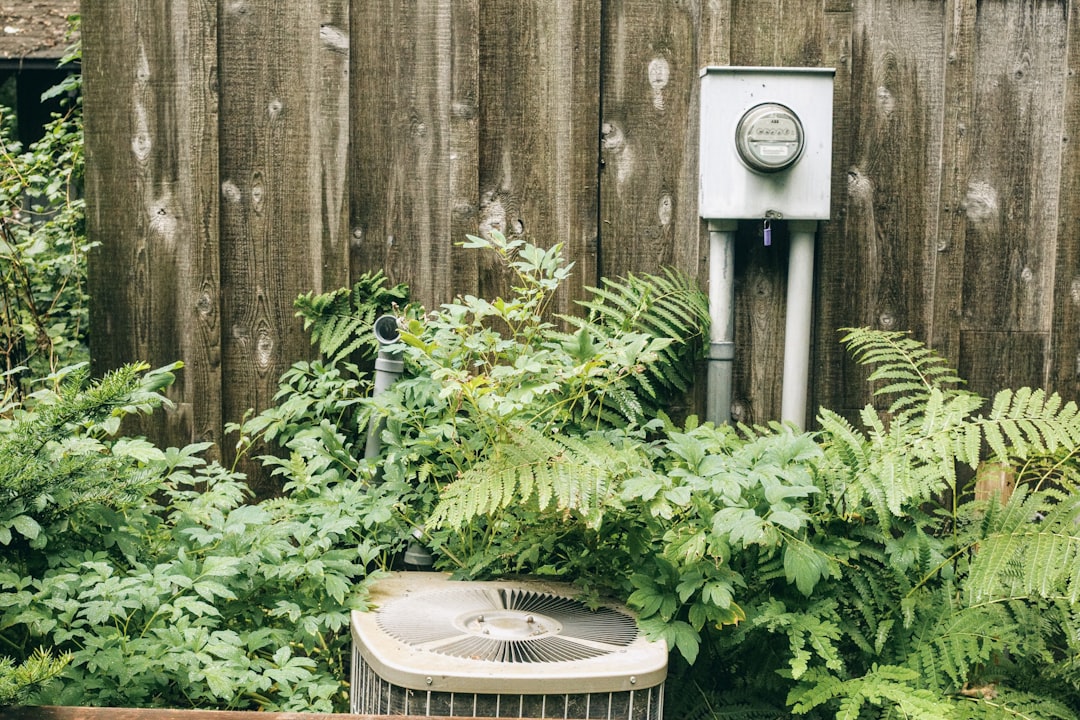
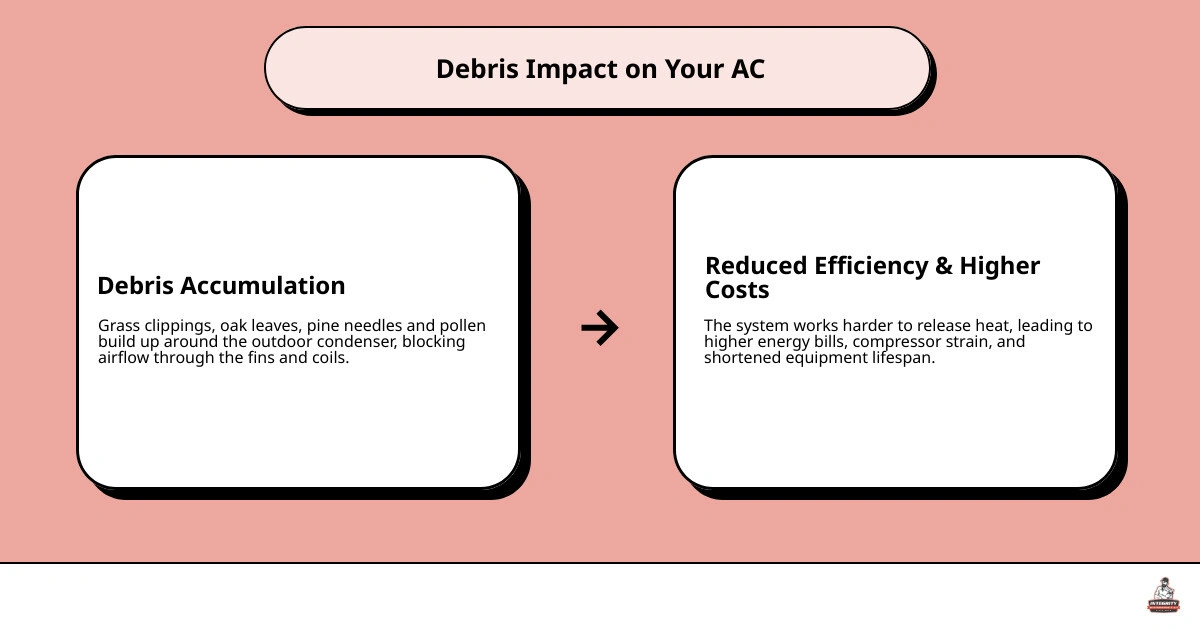
Knowing how to clear debris from around your outdoor unit is one of the simplest and most impactful things you can do to keep your AC running efficiently in Florida's demanding climate. A clogged condenser can't release heat properly — and when that happens, your system works harder, your energy bills climb, and your compressor takes on stress it was never meant to handle. According to the U.S. Department of Energy, restricted airflow from debris is among the top causes of reduced AC efficiency and premature system failure.
Here's a quick overview of how to clear debris from around your outdoor unit safely:
- Shut off power at the thermostat, circuit breaker, and outdoor disconnect box.
- Remove large debris by hand — leaves, twigs, and grass clippings around the base and top grille.
- Trim back vegetation to maintain at least 2–3 feet of clearance on all sides.
- Vacuum the fins gently using a shop vac with a soft brush attachment.
- Rinse the coils with a regular garden hose at a 45-degree angle — never a pressure washer.
- Let the unit dry completely before restoring power.
- Inspect for damage — bent fins, strange noises, or fluid leaks mean it's time to call a pro.
I'm Billy Gregus, owner of Integrity Refrigeration & AC, and with years of hands-on HVAC experience serving Polk County homeowners, I've seen how a little neglect around the outdoor unit can snowball into costly repairs — which is exactly why I want to walk you through how to clear debris from around your outdoor unit the right way. Let's dig into what's really happening inside that unit when debris piles up, and what you can do about it today.
Terms related to how to clear debris from around your outdoor unit:
- heat pump maintenance checklist for florida homeowners
- how to clean your outdoor heat pump unit safely
Why You Must Know How to Clear Debris From Around Your Outdoor Unit
Your outdoor air conditioning unit (often called the condenser) is the unsung hero of your home comfort system. While your indoor evaporator coil absorbs heat from your indoor air, the outdoor unit has the monumental job of releasing that trapped heat into the outside atmosphere.
When debris accumulates around the outdoor unit, it acts like a thick, heavy blanket wrapped around your system. The heat that your air conditioner worked so hard to pull out of your living room gets trapped inside the condenser. This causes the refrigerant pressures and internal temperatures to skyrocket. On a typical hot afternoon in Lakeland, FL, or Davenport, FL, the internal temperature of a clean condenser can reach 130°F to 160°F. If the unit is choked by debris, those temperatures climb even higher, putting immense compressor strain on the heart of your system.
What happens when your compressor is constantly strained?
- Reduced Heat Transfer: The refrigerant cannot cool down properly, meaning the air blowing out of your indoor registers won't feel nearly as cold as it should.
- Spike in Energy Bills: A dirty outdoor condenser coil can reduce AC efficiency by 20% to 30%. Because the system can't release heat efficiently, it has to run longer and work harder, which directly increases your monthly electric bills.
- Shortened System Lifespan: While a well-maintained heat pump or AC system can last up to 20 years, a neglected system choked by debris may fail in just 12 to 15 years.
- Catastrophic Compressor Damage: Operating under high pressure and extreme heat will eventually destroy the compressor. Replacing a compressor is one of the most expensive repairs in the HVAC industry, often costing thousands of dollars.
By taking a few minutes to clear away leaves, grass, and dirt, you are directly protecting your wallet. If you are already noticing that your system is struggling to keep up, check out our guide on the Signs Your AC Outside Unit is Failing to determine if your unit has already sustained long-term damage.
Common Types of Florida Debris and Clearance Rules
Florida's lush, fast-growing environment presents unique challenges for outdoor HVAC units. In places like Winter Haven, FL, and Auburndale, FL, we aren't just dealing with a few dry autumn leaves; our systems battle a year-round onslaught of organic material.
Here are the most common types of debris that find their way to your outdoor unit and how they impact performance:
- Grass Clippings: When mowing the lawn, many homeowners accidentally direct the mower's discharge chute toward the AC unit. Wet, fresh-cut grass clippings are highly sticky. They adhere to the damp condenser coils, dry into a tough, paper-like barrier, and completely choke off airflow.
- Oak Leaves and Twigs: High winds and summer thunderstorms shake loose heavy oak leaves and twigs, which fall directly onto the top grille of the unit or pile up around the base.
- Pine Needles: Pine needles are thin and sharp, allowing them to slip easily through the protective outer grilles and lodge deep between the delicate aluminum fins, where they are incredibly difficult to remove.
- Pollen and Dust: During the spring, a thick blanket of yellow pollen covers everything in Central Florida. This fine dust combines with humidity to create a sticky paste that bakes onto the condenser coils, acting as an insulating layer that prevents heat from escaping.
| Debris Type | Speed of Accumulation | Primary Impact on System | Recommended Removal Method |
|---|---|---|---|
| Grass Clippings | Fast (after every mow) | Blinds the coil surface, cutting off immediate airflow | Soft brushing and gentle hose rinsing |
| Oak Leaves & Twigs | Moderate (seasonal/storm-driven) | Blocks top exhaust fan and traps moisture at the base | Hand removal and clearing the base pad |
| Pine Needles | Moderate (continuous near pines) | Wedges deep between aluminum fins, restricting micro-airflow | Vacuuming with brush attachment / Fin comb |
| Pollen & Grime | Slow but steady (spring/summer) | Creates an insulating barrier on metal surfaces, reducing heat transfer | Biodegradable coil cleaner and gentle water rinse |
To prevent these materials from suffocating your system, you must follow strict clearance guidelines. The golden rule of HVAC outdoor clearance is to maintain at least 2 to 3 feet (24 to 36 inches) of empty space on all sides of your outdoor unit. This means keeping bushes pruned, weeds weeded, and avoiding the temptation to build tight decorative fences or stack firewood against the unit. Additionally, you should maintain at least 5 feet (60 inches) of clear space above the unit so the hot air blowing out of the top exhaust fan can rise freely without being pushed back down by overhanging tree branches.
For a complete breakdown of how to prepare your entire system for the grueling Florida heat, refer to our Pre-Summer AC Tune-Up Checklist for Florida.
Safe DIY Debris Removal and Coil Cleaning
Now that you understand the "why" and the "what," let's talk about the "how." Cleaning your outdoor unit is highly effective, but it must be done with care. The aluminum fins on your condenser coil are incredibly thin and fragile—they can bend or crush at the slightest improper touch.
Before you begin, gather the following essential tools:
- Heavy-duty work gloves (to protect your hands from sharp metal panels and thorny weeds)
- Safety goggles
- A shop vacuum with a soft brush attachment
- A standard garden hose with a multi-spray nozzle (do not use a pressure washer!)
- A fin comb (optional, for straightening bent aluminum fins)
- A screwdriver or nut driver (if you plan on removing the top grille)
Safety Steps on How to Clear Debris From Around Your Outdoor Unit
Safety is paramount when working with an outdoor electrical appliance. Your outdoor unit operates on high-voltage electricity, and water and electricity are a dangerous combination.
- Turn off the system at the thermostat: Set your indoor thermostat to "Off." This prevents the system from trying to kick on while you are working on it.
- Disconnect the outdoor power: Locate the metal electrical disconnect box mounted on the wall near your outdoor unit. Open the cover. Depending on your setup, you will either see a large switch to flip to the "Off" position, or a pull-out plug. If it is a pull-out plug, pull it straight out firmly.
- Double-check the power: Stand next to the unit and listen carefully. There should be no humming or fan movement. If you want to be 100% sure, you can also switch off the dedicated AC circuit breaker inside your home's main electrical panel.
- Be mindful of capacitors: Even with the power disconnected, the run capacitor inside the unit stores a dangerous electrical charge. Avoid sticking tools or fingers into the electrical access panel of the unit.
Step-by-Step Instructions on How to Clear Debris From Around Your Outdoor Unit
Once you have verified that the power is completely disconnected, you can safely begin the cleaning process:
- Step 1: Clear the surrounding area. Put on your work gloves and pull any weeds, vines, or tall grass growing around the concrete pad. Use garden shears to trim back nearby bushes and shrubs so they sit at least 2 to 3 feet away from the unit. Rake away any mulch, pine straw, or fallen leaves from the base of the pad.
- Step 2: Manually remove large debris. Carefully pick out any twigs, leaves, or trash that have become wedged in the outer protective grilles. If you feel comfortable doing so, you can use a screwdriver to remove the top fan grille. Carefully lift the fan assembly (being mindful of the wires) and reach inside to scoop out any leaves, dead lizards, or debris that have collected in the bottom pan of the unit. Replace the top grille immediately after cleaning the interior.
- Step 3: Vacuum the exterior fins. Attach the soft brush tool to your shop vac. Gently run the brush vertically along the metal fins. Always brush vertically (up and down), never horizontally (side to side). Brushing sideways will instantly bend the delicate aluminum fins, blocking airflow.
- Step 4: Gently rinse the coils. Grab your garden hose. Set the nozzle to a gentle "spray" or "shower" pattern. Never use a pressure washer, as the high-pressure stream will flatten the fins like paper. Spray the coils from the top down, keeping the hose nozzle at a 45-degree angle. If possible, spray from the inside of the unit outward to push the trapped dirt, pollen, and grass clippings out of the fins rather than forcing them deeper inside.
- Step 5: Straighten bent fins. Inspect the aluminum fins. If you notice any areas that are bent or crushed (often caused by hail, stray toys, or careless weed-whacking), use a specialized fin comb to gently comb them back into place.
- Step 6: Let it dry and restore power. Allow the unit to air-dry completely (usually 30 to 60 minutes in our warm Florida sun) before flipping the disconnect switch back on and turning your thermostat back to "Cool."
For residents in Auburndale, FL, who want to ensure their coils are sparkling clean, we have compiled additional localized strategies in our AC Coil Cleaning Tips Auburndale FL and our AC Coil Cleaning Guide Auburndale FL.
Common Mistakes to Avoid and Long-Term Maintenance Habits
While DIY maintenance is highly beneficial, a few common mistakes can turn a simple cleaning chore into an expensive repair bill.
- The Pressure Washer Catastrophe: We cannot emphasize this enough: keep pressure washers far away from your air conditioner. The intense pressure will bend the aluminum fins flat, permanently restricting airflow and forcing you to replace the entire coil.
- Using Harsh Household Chemicals: Do not use bleach, vinegar, or acidic household cleaners on your condenser coils. These chemicals can corrode the copper tubing and aluminum fins, leading to refrigerant leaks. Stick to plain water or specialty, non-acidic foaming coil cleaners.
- Piling Mulch Against the Pad: Mulch retains moisture and organic material. Piling mulch up against the concrete pad of your AC unit creates a breeding ground for rust, corrosion, and pests like ants or termites that love to chew through electrical wiring. Keep mulch a few inches below the level of the concrete pad.
- Ignoring the Indoor System: Cleaning the outdoor unit is only half the battle. If your indoor vents are blocked or your air filter is clogged, your system will still suffocate. Learn how to keep the air flowing freely inside your home with our guide on How to Keep Your AC Vents and Registers Clear.
To keep your system running beautifully for years to come, establish a few simple long-term habits. Make it a point to check the outdoor unit every time you mow your lawn. Ensure the mower's discharge chute is pointed away from the unit, and promptly sweep away any grass clippings that land nearby.
Additionally, schedule a professional maintenance tune-up at least once a year. A trained technician can perform deep-cleaning tasks and electrical checks that go far beyond basic debris removal. To see what a comprehensive professional checkup entails, take a look at the AC Maintenance Checklist What Technicians Look For During Service.
Frequently Asked Questions About Outdoor AC Maintenance
How often should I clear debris from my outdoor unit?
We recommend performing a quick visual inspection of your outdoor unit at least once a month, especially during the spring and summer when grass is being cut weekly and pollen is heavy. You should also make it a habit to inspect the unit immediately after major Florida storms, as high winds can plaster wet leaves against the coils or drop heavy branches onto the top fan grille.
Can I spray my outdoor AC unit with a garden hose?
Yes! Your outdoor unit is designed to withstand heavy rain, so spraying it with a standard garden hose is perfectly safe. Just remember to turn off the power first, use moderate water pressure, and avoid spraying water directly into the electrical control box. For a step-by-step walkthrough tailored for Eagle Lake residents, check out our AC Coil Cleaning Guide Eagle Lake FL.
When should I call a professional for outdoor unit cleaning?
While clearing leaves and rinsing loose dirt is a great DIY project, you should call a certified technician if you encounter any of the following:
- The aluminum fins are severely flattened or crushed over a large area.
- There is a thick, greasy, or tar-like buildup on the coils that water won't wash away.
- You notice oil stains around the base of the unit (which often indicates a refrigerant leak).
- The condenser fan blade is bent, or the motor makes strange rattling, buzzing, or grinding noises when running.
- You suspect pest damage, such as fire ants nesting in the electrical contactor.
For homeowners in Bartow, FL, our team is always ready to assist with complex cleanings. Learn more about our specialized services in our guide on Professional AC Coil Cleaning in Bartow FL.
Conclusion
Keeping the area around your outdoor AC unit clear of debris is one of the easiest ways to ensure your home remains a cool, comfortable sanctuary all year long. By maintaining that crucial 2-to-3-foot clearance zone and gently rinsing away built-up dirt, you will lower your energy bills, prevent unexpected breakdowns, and extend the life of your valuable cooling system.
At Integrity Refrigeration & AC, we are proud to be your local, family-owned "Climate Commanders" serving Winter Haven, FL, and all of Polk County. As a BBB A+ accredited business with deep roots in the community since 2008, we pride ourselves on delivering precision HVAC and refrigeration services with a warm, friendly, and honest approach.
We understand that home maintenance and system replacements can sometimes bring unexpected financial stress. That's why we are proud to offer flexible financing options to make sure every family in our community can afford a comfortable, safe home. Plus, we love helping our customers save with fantastic promotions, including $500 off new system installations and 10% off APCO-X Indoor Air Quality systems!
Whether you need a routine maintenance check, a deep coil cleaning, or a complete system upgrade, our experienced team is here to help 24/7. Schedule professional heat pump maintenance in Polk City or contact us today to experience the Integrity difference!
Recent Posts


backed by integrity guarantee
At Integrity Refrigeration and A/C, we believe that trust isn’t given, it’s earned