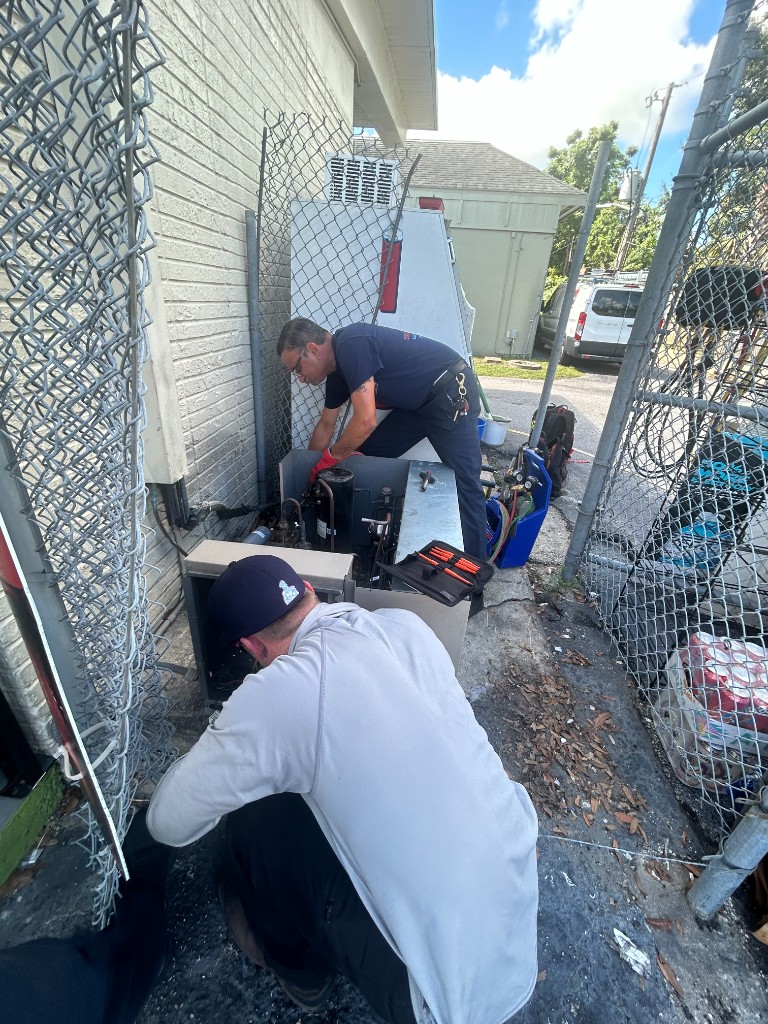

The Hidden Threat to Commercial Freezers as Fall Approaches
When mid-October brings a deceptive "false fall" weather pattern to Central Florida, preventing condensation in walk in freezers becomes an urgent daily priority for bakery and restaurant managers. While the calendar says autumn and ambient temperatures might slightly drop, high humidity persists. Our team at Integrity Refrigeration & AC has seen firsthand how this weather shift introduces a highly specific, concrete problem: walk-in coolers and freezers suddenly developing excess moisture, sweating, or rapid frost buildup. If you manage a busy commercial kitchen, the critical decision point you face is determining whether this sudden sweating is just a simple operational quirk from a busy service rush, or a mechanical failure requiring an immediate pre-winter inspection to protect your valuable food inventory.
For immediate assistance with failing equipment, reach out for emergency repair services to secure your commercial system.
Why High Ambient Humidity Triggers Walk-In Sweating
To understand why your commercial refrigeration equipment struggles during the fall, you have to look at the physics of your kitchen environment. In our years of servicing Winter Haven's bustling food service industry, we've found that condensation is not a random occurrence; it happens rapidly when warm, moisture-laden air makes contact with surfaces that are sitting below the dew point. In a commercial bakery or restaurant, this dynamic is amplified to an extreme degree.
Your kitchen is a volatile mix of ambient heat radiating from heavy-duty ovens and stovetops, contrasting sharply with the extreme cold generated by your walk-in freezer, which typically operates between -10°F and 0°F. When persistent high ambient relative humidity is added to this environment, the air becomes saturated with moisture. This heavy moisture constantly presses against the exterior of your walk-in panels, searching for any cold surface to condense upon.
Florida's humid subtropical climate demands tighter vapor barriers and more robust insulation compared to drier northern climates. When the air is thick with moisture, standard or aging vapor barriers can quickly become overwhelmed. This specific weather pattern makes uninsulated, aging, or failing walk-in panels highly susceptible to sweating.
| Climate Profile | Ambient Kitchen Impact | Vapor Barrier Demand | Condensation Risk |
|---|---|---|---|
| Drier Northern Climates | Lower baseline moisture, easier to control with standard HVAC | Standard panel insulation usually sufficient | Low to Moderate (mostly operational) |
| Florida Humid Subtropical | High baseline moisture compounding with oven heat | Requires maximum-rated vapor barriers and perfect seals | High (both operational and mechanical risks) |
When high ambient relative humidity interacts with a surface that lacks proper thermal resistance, the moisture drops out of the air and forms water droplets. If this happens inside the freezer, it quickly turns into ice. If it happens on the outside panels, you will notice persistent sweating and dripping that can create slip hazards and damage surrounding drywall or flooring.
Diagnosing the Drip: Daily Operations vs. Equipment Failure
The Problem: When our technicians get called out to a kitchen in Winter Haven FL, we often find water pooling near the walk-in freezer door, or heavy condensation forming on the exterior metal panels. The immediate challenge is figuring out if your staff is causing the issue, or if the machinery itself is breaking down.
The Cause (Operational): Operational issues are usually tied to human behavior. During a busy delivery morning or a high-traffic dinner service, employees might leave the heavy walk-in doors propped open. Every second that door remains open, hundreds of cubic feet of humid kitchen air rush into the sub-zero space. This immediately spikes the internal temperature and introduces massive amounts of moisture, which the system then has to work overtime to freeze or remove. Missing strip curtains or poorly stacked inventory blocking the interior fans can also create similar operational bottlenecks.
The Cause (Mechanical): Mechanical failures present differently. If you notice sweating on the outside of the walk-in panels, continuous frost buildup on the evaporator coils, or pooling water even when the doors have been firmly closed for hours, you are likely looking at a hardware breakdown. Worn gaskets, failing defrost cycles, or compromised insulation panels cannot be fixed by simply changing staff habits.
The Solution: While operational habits can and should be corrected by management, mechanical symptoms require licensed diagnostic expertise. Misdiagnosing a mechanical failure as just a "humid day problem" often leads to catastrophic inventory loss. This is why rapid emergency commercial refrigeration diagnostics are essential when mechanical failures are suspected to actively prevent costly food inventory loss. If you suspect the hardware is failing, scheduling professional system inspection and testing is the safest way to protect your business.

Four Mechanical Faults That Cause Freezer Condensation
When high ambient relative humidity infiltrates your commercial system, it exploits any mechanical weakness it can find. Attempting DIY repairs on commercial refrigeration is dangerous and often voids warranties. Here are the four primary mechanical faults our technicians frequently diagnose and resolve:
1. Worn or Torn Door Gaskets
The rubber gasket lining your walk-in freezer door is the primary defense against humid kitchen air. Over thousands of door openings, these gaskets become brittle, crack, or tear. Even a hairline gap in the seal allows a continuous stream of warm air to be sucked into the freezing environment. This constant air exchange forces the compressor to run nonstop and creates heavy frost buildup around the door frame and interior ceiling.
2. Failing Defrost Timers or Heaters
Commercial freezers are designed to handle a certain amount of moisture through an automated defrost cycle. The system periodically turns off the cooling cycle and activates a heater to melt away any frost that has accumulated on the evaporator coils. If the defrost timer fails, or if the heating element burns out, the frost never melts. It eventually forms a solid block of ice that chokes off the airflow entirely, leading to warm temperatures inside the box and heavy condensation outside.
3. Compromised Panel Insulation
Walk-in cooler and freezer panels are filled with dense polyurethane foam insulation designed to provide a high R-value (thermal resistance). If the metal skin of the panel is punctured, or if the seams begin to separate, moisture can penetrate the core. Once the insulation becomes waterlogged, it completely loses its ability to block heat transfer. The cold from the inside transfers directly to the outer metal skin, causing it to sweat profusely whenever the kitchen is humid.
4. Blocked or Malfunctioning Evaporator Fans
The evaporator fans inside the freezer are responsible for circulating cold air evenly throughout the space. If a fan motor burns out, or if the fan blades become jammed with ice, the cold air settles in one area rather than circulating. This creates localized warm spots where condensation can form and drip onto your stored food products. A licensed technician must safely diagnose electrical faults in the fan motors to restore proper airflow.
How Unchecked Moisture Threatens Food Safety and Equipment
Ignoring a sweating walk-in freezer in Winter Haven FL is a gamble that most food service businesses cannot afford to take. The consequences extend far beyond a puddle on the floor; they strike directly at your regulatory compliance and your bottom line.
FDA Food Code Violations: Health inspectors pay close attention to commercial refrigeration for a reason. Fluctuating temperatures and dripping condensation severely compromise food safety standards. If condensation drips from the ceiling onto uncovered bakery ingredients or prep materials, it introduces a severe risk of cross-contamination and bacterial growth. Maintaining a strict, stable sub-zero environment is non-negotiable for compliance.
Massive Inventory Loss: The financial impact of throwing out spoiled goods can be devastating. When a freezer struggles to overcome continuous moisture intrusion, the internal temperature inevitably rises. A single overnight failure can result in massive financial losses from ruined frozen proteins, delicate bakery ingredients, and prepped meals.
Premature Equipment Death: Your commercial compressor is the heart of the refrigeration system. When it has to run continuously to compensate for lost ambient cooling and constant moisture intrusion, it experiences severe mechanical strain. Overworking the compressor leads to overheating, oil breakdown, and eventual catastrophic failure. There is a distinct tipping point where replacing an overworked, failing system via commercial equipment replacement becomes far more cost-effective than paying for constant emergency patches and lost inventory.
Actionable Steps for Preventing Condensation in Walk-In Freezers
While mechanical repairs must be left to licensed professionals, there are several safe, operational steps managers can take to mitigate moisture issues, especially as mid-October weather shifts approach. As part of your fall maintenance routine, implementing these operational controls can significantly reduce the strain on your equipment.
- Install Heavy-Duty PVC Strip Curtains: If your walk-in does not have strip curtains, or if the current ones are torn and yellowed, replace them immediately. These thick plastic strips act as a secondary barrier, significantly reducing the amount of warm air that rushes in when the main door is opened.
- Enforce Strict Door Discipline: Train your kitchen and delivery staff on the financial impact of leaving the door propped open. Establish a strict rule that the door must be closed immediately after entering or exiting. Never allow the door to be propped open during a 20-minute delivery unloading process.
- Organize Inventory for Airflow: The evaporator coils need clear space to breathe. Ensure that boxes, speed racks, and ingredients are not stacked too high or pushed directly against the fan guards. Maintain at least 18 inches of clearance around the interior refrigeration components to allow proper air circulation.
- Monitor Ambient Kitchen Humidity: Pay attention to the overall climate of your kitchen. Ensure that your exhaust hoods over ovens and stoves are functioning correctly to pull heat and steam out of the building. If the general kitchen area feels like a sauna, your walk-in freezer will inevitably suffer.
By controlling the operational side of your kitchen, you make it much easier for professionals when diagnosing other sweating and condensation issues within your broader HVAC and refrigeration footprint.
Frequently Asked Questions About Commercial Freezer Condensation
Why is my walk-in freezer sweating on the outside?
Sweating on the outside panels is usually caused by compromised panel insulation or extreme temperature differentials. When the cold freezer interior meets a highly humid, warm exterior kitchen environment, moisture from the high ambient relative humidity condenses on the metal. If the insulation inside the panel is waterlogged or degraded, it can no longer prevent this thermal transfer, leading to constant exterior dripping.
How do you stop condensation in a freezer?
Operationally, you can stop condensation by using heavy-duty strip curtains and strictly limiting how long the doors remain open during service. Mechanically, stopping the issue requires a licensed technician to replace worn door gaskets, clear blocked drains, and ensure the automated defrost cycle is functioning properly so the system can effectively manage internal moisture.
What causes ice buildup in a walk-in freezer?
Ice buildup occurs when excess moisture entering the freezer is rapidly cooled and turns to solid ice. This is most often due to bad door seals letting humid air leak in, doors being propped open by staff, or a failing evaporator fan and defrost timer that cannot melt away the natural frost accumulation during normal operation cycles.
How do you control humidity in a walk-in cooler?
To control humidity in a walk-in cooler, you must ensure the refrigeration system is properly sized for the space and usage. Keep the evaporator coils clean, ensure the door gaskets form an airtight seal, and actively control the ambient humidity of the kitchen surrounding the cooler using proper exhaust ventilation and facility HVAC systems.
When should a bakery call a professional for freezer condensation?
You should call a licensed professional immediately if condensation is pooling on the floor, heavy ice is forming on the evaporator coils, or the internal temperature cannot be maintained. Waiting to call a pro greatly increases the risk of total compressor failure and severe inventory loss due to food spoilage.
Protect Your Inventory Before the Next Humidity Spike
While the heavy fall humidity in Winter Haven FL is an inevitable part of the local climate, walk-in freezer sweating is entirely preventable. For bakery and restaurant managers, understanding the difference between a busy staff leaving a door open and a mechanical component failing is the key to protecting your bottom line. Our crew at Integrity Refrigeration & AC knows that catching a worn gasket or a stalling defrost timer early can save you from throwing out a week's worth of expensive inventory.
If you are noticing excessive moisture, pooling water, or frost buildup that doesn't resolve with better door discipline, it is time to bring in professional diagnostics. Addressing these issues proactively ensures your kitchen remains safe, compliant, and fully operational. Do not wait for a minor drip to become a major compressor failure; schedule emergency repair services to get a clear explanation of your system's health and secure your commercial equipment today.