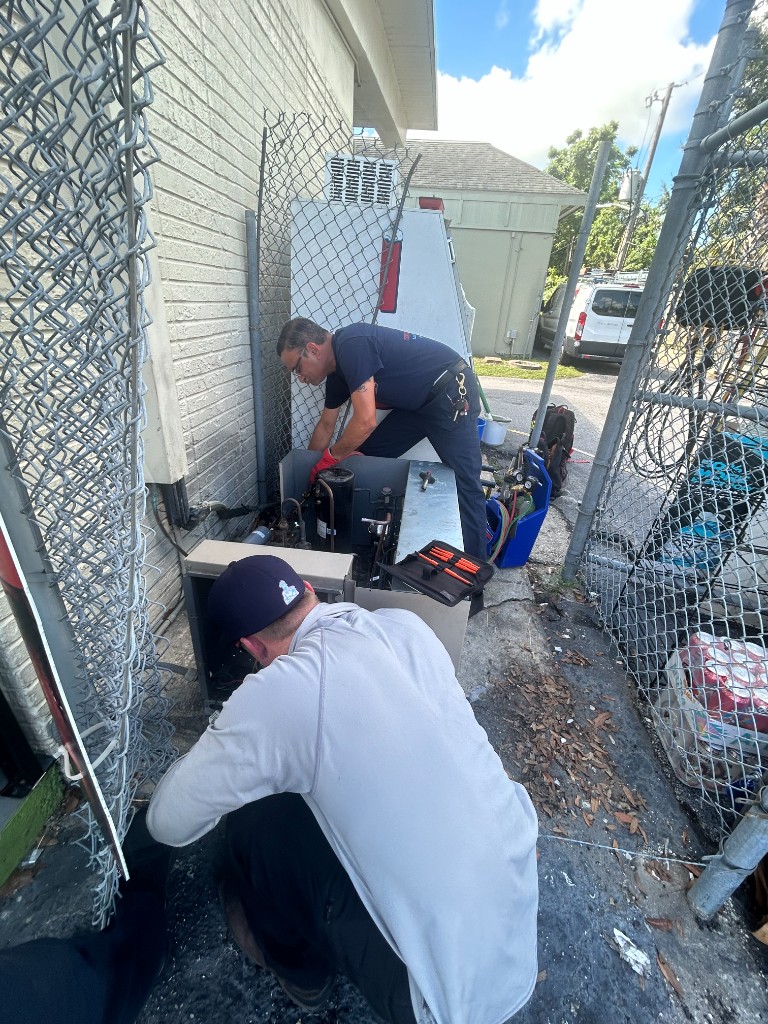

Why "Still Cold" Doesn't Mean Your Prep Table Is Healthy
Your kitchen staff might not notice an issue if the ingredients are cold, but the real cost of ignoring a minor refrigerant leak in a commercial prep table goes far beyond a slightly warmer top rail. During a busy dinner rush, the only thing that matters to your line cooks is keeping the ingredients below the FDA-mandated 41 degrees Fahrenheit. If the thermometer reads 38 degrees, the equipment is generally assumed to be working perfectly. However, at Integrity Refrigeration & AC, we know firsthand that this assumption creates a dangerous blind spot in commercial kitchens.
The concrete problem starts quietly: a slow refrigerant leak develops, but because the system is still technically holding temperature, the warning signs are ignored. What your staff cannot see—but what our technicians diagnose daily across Winter Haven—is that the compressor is now forced to run continuously against high ambient kitchen heat just to maintain that baseline temperature. You eventually face a critical decision point: deciding to dispatch a technician to find and patch a minor slow leak immediately, rather than ignoring it because the table is "still technically holding temp."
When you rely on robust commercial cooling and air conditioning services, you quickly learn that waiting for a total breakdown is the most expensive way to operate. Pushing a compromised system to its absolute limits sets off a mechanical domino effect that turns a simple maintenance task into a catastrophic failure.
The Illusion of Safety: Judging Equipment by Food Temperature Alone
Commercial prep tables are engineered to cycle on and off. They run long enough to pull the temperature down to the set point, and then they shut down to rest while the insulated cabinet holds the cold air. This cycling process is the heartbeat of a healthy refrigeration system. Kitchen staff often judge a prep table purely by whether the ingredients are cold, entirely ignoring the cycle times required to achieve that result. In our years of servicing local restaurants, we've found this creates a powerful illusion of safety.
When refrigerant levels drop even slightly, the system loses its physical ability to reject heat efficiently. Refrigerant is the medium that absorbs heat from the food pan area and carries it away. With less refrigerant in the lines, the system has to work twice as long to move the same amount of heat.
The longer the cycle times become, the closer the equipment gets to the edge of failure. Even if the internal thermometer stubbornly reads 38 degrees, the machinery underneath is fighting a losing battle. If you wait until the thermometer finally spikes and the food gets warm, you are no longer looking at routine maintenance—you are looking for emergency repair services in Winter Haven.
| System Status | Cycle Behavior | Temperature Holding | Long-Term Outcome |
|---|---|---|---|
| Healthy System | Cycles on and off regularly | Consistently below 41°F | Maximum equipment lifespan |
| Minor Leak (Early) | Extended run times, short rests | Still below 41°F | Accelerated wear on parts |
| Minor Leak (Ignored) | Runs constantly, never shuts off | Fluctuates near 41°F | Imminent compressor failure |
The Mechanical Domino Effect: Starving the Compressor
To understand why a minor leak is so destructive, you have to look at how the compressor actually survives its daily workload. The compressor is the heart of your prep table, pumping refrigerant vapor through the system. But refrigerant does more than just cool your food—it also cools the compressor motor itself during operation.
The Loss of Vital Cooling
When a minor leak occurs, it starves the compressor of this vital cooling effect. Because there is less cold refrigerant returning to the compressor shell, the internal motor temperatures begin to spike. The system is essentially running a marathon without any water. The heat of friction builds up rapidly, and the internal components begin to bake.
The Shift to Constant Operation
Because the system is struggling to reach the thermostat's set point, you will see a shift to 24/7 continuous compressor operation instead of normal cycling. The compressor never gets a chance to turn off and cool down. It runs endlessly, generating more and more heat, while receiving less and less cooling from the depleted refrigerant charge.
Oil Degradation and Mechanical Wear
This continuous, overheated running degrades the compressor oil. Refrigeration oil is designed to operate within a specific temperature range. When internal temperatures skyrocket, the oil loses its viscosity, breaks down, and fails to lubricate the moving metal parts. This accelerates mechanical wear exponentially, tearing the compressor apart from the inside out—a tragic end we see all too often when tearing down ruined equipment in our shop.

The Climate Multiplier: Florida's Late Summer Heat in the Kitchen
Commercial kitchens are already brutal environments for machinery, but regional weather patterns drastically reduce the margin for error. In Winter Haven, the late-summer climate acts as a massive multiplier for equipment stress. High ambient temperatures in commercial kitchens mean your refrigeration equipment is already fighting an uphill battle just to maintain baseline operations.
By the time September arrives, high ambient Florida heat is still amplifying kitchen temperatures to extreme levels. As we transition into early fall, our team at Integrity Refrigeration & AC consistently responds to calls where a compromised system simply cannot keep up. When kitchen doors open and close, waves of heavy, humid air rush in, forcing the condenser to work even harder to reject heat.
A compromised prep table must work twice as hard to reject heat into an already hot kitchen environment. When the air surrounding the condenser coils is sitting at 95 degrees, the heat transfer process slows down significantly. This seasonal environmental pressure accelerates the timeline from a "minor leak" to a complete system failure. A system that might have limped along for a few weeks in the winter will burn itself out in a matter of days during a Florida September.
Hidden Operational Penalties: Energy Waste and Accelerated Wear
Before the equipment actually breaks down, a leaking prep table quietly drains your operating budget. The hidden operational penalties accumulate rapidly, starting with your monthly utility bill. The massive energy consumption required to sustain 24/7 continuous compressor operation instead of normal cycling will cause a noticeable spike in your electricity costs. You are paying for the machine to run constantly while receiving a fraction of the cooling power.
Beyond the power bill, you will often see ice buildup on the evaporator coils. This is a classic symptom of low refrigerant. As the pressure drops, the coil temperature drops below freezing, turning ambient humidity into a solid block of ice. This ice further insulates the system, blocking airflow and reducing efficiency even more. It creates a vicious cycle where the machine runs harder, freezes thicker, and cools less.
There is also the hidden cost of premature wear and tear on secondary components. Condenser fan motors, relays, and starting capacitors are not designed to run without stopping. When they operate continuously, their lifespans are cut drastically short. As we always tell our clients during pre-season fall tune-ups, investing in routine equipment inspection and testing is vastly more cost-effective than absorbing the operational penalties of a neglected, constantly running system.
The Inevitable Breakdown: Mid-Service Compressor Seizures
If the early warning signs are ignored, the situation reaches a catastrophic endpoint. The moment of failure usually happens when the overheated, overworked compressor finally seizes up permanently. The degraded oil fails, the internal metal components grind together, and the motor locks into place. Once a compressor seizes, it cannot be repaired—it must be completely replaced.
These failures almost always happen during peak service hours. Equipment breaks when it is under the most load, which means your prep table is most likely to die in the middle of a Friday night dinner rush. The immediate fallout is severe: ruined inventory that must be thrown away, potential health code violations, and completely disrupted kitchen operations as your line cooks scramble to work out of temporary coolers.
When cooling equipment fails at a business location, the disruption is immediate. Last September, one local Winter Haven restaurant experienced a complete AC and refrigeration failure during operating hours; our team at Integrity Refrigeration & AC arrived immediately and had to install a brand-new unit by the end of the day because the old system was beyond saving. The exact same urgency applies to your commercial prep table. At this stage, the business is no longer looking at a simple leak patch. You are facing a major overhaul, requiring full commercial equipment replacement. As seasoned emergency responders in Polk County, we frequently respond to these predictable, avoidable hazards, and we see firsthand how painful a mid-service seizure is for a restaurant's bottom line.
Breaking the Cycle: Identifying and Addressing Minor Leaks Early
The key to protecting your equipment is recognizing the symptoms before the system destroys itself. Kitchen managers must look beyond the internal thermometer and pay attention to how the machine is behaving.
We frequently see the fallout of bad work or delayed maintenance. Last fall, we were called to a local business to fix a newly installed cooling unit that a previous company had botched. Our technicians correctly diagnosed the underlying leak and managed to keep the repair costs down before the system was ruined. When it comes to your prep table, catching the root cause early is the only way to save the unit.
Implement these actionable steps to identify issues early:
- Monitor cycle times: Listen to the prep table during a quiet moment in the kitchen. If the compressor never shuts off, you have a problem, even if the food is cold.
- Check for ice: Inspect the evaporator coils for frost or solid ice buildup. This is a clear indicator that the system is starving for refrigerant and freezing the ambient humidity.
- Listen for pressure drops: Pay attention to hissing sounds that indicate a refrigerant leak near the coils or copper lines.
- Feel the heat: If the area around the compressor housing feels excessively hot to the touch, the motor is likely overheating due to continuous operation.
At the first sign of continuous operation, dispatch a technician immediately. Finding and patching a minor slow leak preserves the lifespan of the entire equipment line.
Protecting Your Commercial Kitchen Operations
A slow leak inevitably destroys the compressor, proving that ignoring the issue guarantees a much larger disruption to your service and inventory. The real cost of ignoring a minor refrigerant leak in a commercial prep table is measured in ruined food, emergency downtime, and premature equipment replacement.
Catching these issues before they escalate into mid-service emergencies is the cornerstone of a profitable kitchen. By training your staff to monitor cycle times and acting quickly when a system starts running continuously, you protect your bottom line. As you prepare your kitchen for the upcoming fall and winter holiday rushes, proactive equipment care ensures your prep line stays reliable, efficient, and ready for the busiest shifts of the year.
Frequently Asked Questions
Why is my commercial prep table compressor running continuously?
A compressor runs continuously when it struggles to reach the set temperature, often due to a minor refrigerant leak. Without enough refrigerant, the system loses its ability to reject heat efficiently. The equipment is forced to operate 24/7 to compensate for the loss of cooling power. If left unaddressed, this constant running will eventually cause the compressor motor to overheat and fail.
What causes a commercial refrigerator compressor to seize?
Compressor seizure is typically caused by a lack of lubrication and extreme overheating. When a system runs low on refrigerant, the compressor loses its primary source of internal cooling. As temperatures spike, the internal oil degrades and loses its viscosity. Without proper lubrication, the internal metal components grind together until they physically lock up.
What happens if a refrigerator leaks freon?
If a refrigerator develops a leak, it gradually loses its ability to move heat out of the cabinet. You will first notice the system running longer cycles, followed by ice buildup on the evaporator coils. Eventually, the machine will run constantly without actually cooling the food. Ignoring a leak forces the compressor to work itself to death.
Can a commercial prep table run low on refrigerant?
Yes, but it only happens if there is a physical leak in the system. Refrigeration systems are closed loops, meaning they do not consume or "use up" refrigerant over time. If your prep table is low on refrigerant, a technician must locate and repair the hole in the copper lines or coils before simply adding more charge.
How do you know if your prep table has a leak?
The most common early warning sign is a compressor that never shuts off, even if the food is still cold. You may also notice frost or solid ice forming on the evaporator coils inside the cabinet. In some cases, you might hear a faint hissing sound near the refrigerant lines, indicating a pressure drop where the leak is occurring.
Does high kitchen humidity affect a leaking prep table?
Yes, high humidity drastically accelerates the problems caused by a leak. When a system is low on refrigerant, the coils drop below freezing. High ambient humidity in the kitchen is drawn into the cabinet and quickly freezes onto these super-chilled coils. This creates a thick layer of ice that blocks airflow, making the compromised system work even harder.