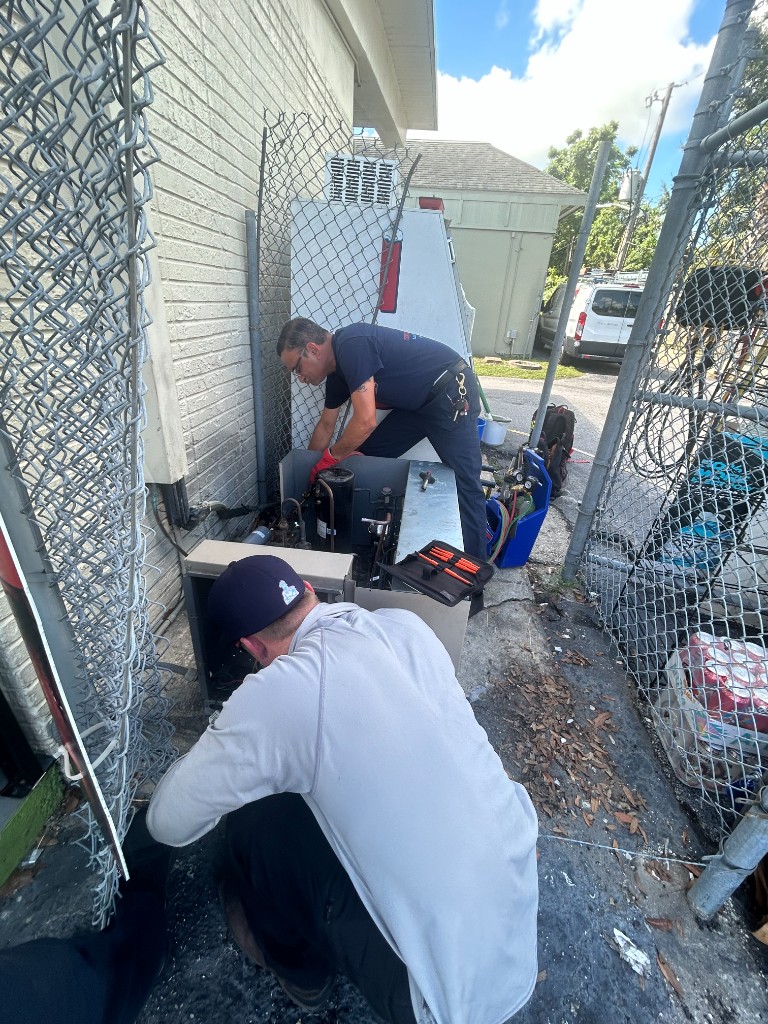

The Breaking Point: When Your Reach-In Freezer Can't Keep Up with the Line
Your ticket printer is firing nonstop, the line cooks are moving at top speed, and you are starting to understand exactly why your restaurant's reach-in freezer is overworking during the lunch rush. The cabinet temperature is creeping dangerously close to the thawing point, the compressor sounds like it is struggling to stay alive, and condensation is pooling on the stainless steel exterior. You are caught in a frustrating position: do you constantly scold your kitchen staff for leaving the door open, or do you accept that your equipment simply cannot handle the operational load of a busy service?
If you need immediate help stabilizing your kitchen equipment, explore our commercial refrigeration services or contact our team for commercial repair.
During a heavy service period, the reality of a commercial kitchen is chaotic. Line cooks are constantly accessing the reach-in freezer for fries, proteins, and prepped ingredients. Every time that door swings open, the internal temperature spikes. Soon, you start noticing ice forming on the internal components despite the unit running constantly. Kitchen managers often blame their staff for these temperature fluctuations, demanding that they "just keep the door closed." However, setting an operational baseline is critical here: acknowledging that simply keeping the door closed is completely impossible during a busy service is the first step toward a real solution.
The core issue is rarely your staff's behavior. Instead, our team at Integrity Refrigeration & A/C typically sees a mechanical mismatch between your equipment's factory settings and the reality of a July peak summer rush. When your reach-in freezer is pushed to its absolute limit, the real solution lies in professional mechanical adjustments, not in shouting across the prep line.
The Mechanics of a High-Traffic Kitchen Environment
To understand why your freezer is struggling, you have to look at the basic physics of what happens every single time the door opens during a busy shift. A reach-in freezer is essentially a carefully balanced thermal envelope. When the door is closed, the system maintains a stable, sub-zero environment. When the door opens, that balance is instantly destroyed.
Cold air is dense and heavy. When a line cook pulls open the freezer door, that heavy, sub-zero air practically spills out of the bottom of the cabinet, crashing onto the kitchen floor. At the exact same moment, the warm, ambient air from the kitchen rushes into the top of the cabinet to fill the vacuum. This immediate swap of air drastically increases the thermal load on the equipment. Frequent door openings multiply this burden on the compressor, forcing it to run continuously just to remove the heat that was introduced seconds earlier.
Furthermore, ambient kitchen temperatures drastically increase the temperature of the air entering the freezer. In a commercial kitchen, you are dealing with massive heat output from ovens, open-flame burners, fryers, and sometimes inadequate ventilation. The air rushing into your freezer isn't just room temperature; it is heavily heated, creating a massive temperature differential that the refrigeration cycle must overcome.
Air Exchange and Thermal Shock
The speed at which this air exchange happens is staggering. A mere five-second door opening is enough to exchange a massive percentage of the air inside a standard reach-in cabinet. When this happens twenty or thirty times an hour during a July peak summer lunch rush, the compressor is subjected to severe thermal shock.
| Operational Period | Average Door Openings (per hour) | Air Exchange Impact | Compressor Run Time |
|---|---|---|---|
| Morning Prep (Idle) | 2 to 4 | Minimal; system recovers within minutes. | Normal cycling (on and off). |
| Lunch Rush (Peak) | 20 to 40+ | Massive; sub-zero air is entirely replaced by hot kitchen air constantly. | Continuous operation (100% run cycle). |
| Afternoon Lull | 5 to 10 | Moderate; system attempts to catch up and remove residual heat. | Extended run times to overcome peak deficit. |
The compressor must immediately kick into overdrive to remove this newly introduced heat. If the door opens again before the compressor has finished removing the heat from the previous opening, the baseline temperature of the cabinet permanently shifts upward for the duration of the shift.
The Invisible Enemy: High Dew Points and Kitchen Humidity
Heat is only half of the equation. The true invisible enemy in a commercial kitchen is moisture. Warm air holds significantly more moisture than cold air, and this physical reality turns a busy lunch rush into a full-blown refrigeration crisis.
With summer temperatures regularly exceeding 90°F and heavy humidity blanketing Central Florida, ambient conditions in local commercial kitchens become extreme. When you factor in boiling pasta pots and dishwashing stations, a pattern we see often is that the air inside a Winter Haven FL restaurant kitchen reaches incredibly high dew points. This means the air is completely saturated with water vapor.
When this highly humid ambient kitchen air hits the sub-zero environment of the reach-in freezer, the physical reaction is instantaneous. Cold air cannot hold moisture. As the hot, wet kitchen air enters the freezer and rapidly cools, it drops all of its moisture. This condensation process immediately follows every single door opening in a humid environment. Water droplets form on the walls, the product, and most dangerously, the evaporator coils.
Humidity, not just heat, is the primary driver of rapid freezing and equipment strain. The refrigeration system is designed to remove heat, but when it is forced to constantly pull gallons of water vapor out of the air, the mechanical components are pushed far beyond their standard operating capacity.
The Chain Reaction: Rapid Frost Accumulation on Coils
Once that heavy moisture enters the cabinet, it follows a predictable and destructive path. The moisture is drawn directly to the coldest surface in the unit: the evaporator coils. These coils are responsible for absorbing heat from inside the cabinet and carrying it away via the refrigerant.
When water vapor touches the freezing metal of the evaporator coils, it flashes directly into frost. Initially, this might just look like a light dusting of snow. However, a thin layer of frost acts as a highly effective insulator. It prevents the metallic coils from absorbing heat from the surrounding cabinet air. As the frost thickens into solid ice, the cooling capacity of the freezer drops dramatically.
This creates a vicious cycle. Because the coils can no longer absorb heat efficiently, the cabinet temperature rises. The thermostat senses this rise and tells the compressor to keep running. As the compressor runs longer, and line cooks continue to open the door, more warm, humid air is drawn in, which rapidly accelerates the frost accumulation.
When the Compressor Never Shuts Off
A compressor stuck in a continuous run cycle is easy to identify. You will hear a constant, strained humming coming from the unit, often accompanied by excessive heat radiating from the condenser exhaust. This continuous operation causes severe long-term wear and tear on the system's vital components, leading to premature motor failure and burned-out relays.
The ultimate result of this evaporator coil frost buildup is a complete loss of temperature control. When the unit can no longer maintain safe holding temperatures, you face the immediate risk of expensive product loss and the very real threat of health inspection failures.

Why Factory Defrost Schedules Fail Under Pressure
If your freezer is icing up, you might wonder why the built-in defrost system isn't handling the problem. The root cause of the system's inability to recover during the shift is almost always mismatched defrost timing. In our extensive experience servicing local commercial kitchens, we find that standard factory defrost schedules are typically set to run at generic intervals out of the box—often four times a day, every six hours.
These factory settings assume average use in a generic environment. They do not account for concentrated heavy-use periods like a restaurant lunch rush, nor do they account for the extreme humidity found in a Winter Haven FL kitchen. If your factory defrost timer triggers at 12:30 PM, right in the middle of peak service, the freezer will shut down its cooling cycle and turn on internal heaters to melt the ice. This sends cabinet temperatures skyrocketing exactly when your cooks are opening the door the most.
Conversely, if the defrost cycle fails to trigger until 4:00 PM, the massive influx of humidity from the lunch rush will have already turned the coils into a solid block of ice, making the late afternoon defrost cycle completely ineffective. This is a common operational hurdle, much like commercial ice machine production drops when ambient kitchen temperatures soar.
Adjusting these timers is absolutely not a DIY task. Opening electrical panels and attempting to rewire or manually override defrost timers without proper licensing is dangerous and can permanently damage the equipment. It requires a licensed professional to calculate the exact timing needed without compromising food safety.
Customizing Defrost Cycles to Your Restaurant's Rhythm
The most effective solution to this problem is having a commercial refrigeration technician analyze your kitchen's specific service hours and traffic patterns. True commercial experts adapt equipment to the kitchen's rhythm, providing top-notch professional service that works around the restaurant's busy schedule rather than forcing the kitchen to adapt to the equipment.
A professional will evaluate exactly when your highest volume of door openings occurs. They will then undergo the process of reprogramming the defrost cycles to occur strategically—usually just before the lunch rush begins, ensuring the coils are perfectly clean, and immediately after the rush ends, to melt away the accumulated frost before it hardens into solid ice. This strategic adjustment prevents freeze-ups without halting service when line cooks need the freezer most.
At Integrity Refrigeration & A/C, our team understands that timing is everything in emergency service. Just as we respond rapidly to residential emergencies—like when a homeowner called us during a hot spring afternoon because their home warranty contractor failed to fix a freon leak, and we arrived within the hour to diagnose the problem, order parts, and restore their AC—we bring that same urgency and precision to commercial kitchens facing a July peak summer meltdown. We adapt to your schedule so your business never misses a beat.
If your current setup is failing during peak hours, it is time to contact our team for commercial repair to get your defrost cycles properly calibrated.
Supporting Your Freezer Through the Busiest Shifts
While reprogramming the defrost timer requires a professional, there are several actionable, non-DIY maintenance steps that your kitchen staff can take to support the mechanical adjustments and prevent evaporator coil frost buildup.
- Inspect and clean door gaskets daily: The rubber seals around the freezer door are your first line of defense against humidity. If they are torn, brittle, or coated in sticky grease, they will not form a perfect seal when the door is actually closed. Wipe them down daily with warm, soapy water.
- Organize inventory for airflow: Proper inventory organization prevents blocked airflow. Never stack boxes directly against the internal fans or block the return air vents at the bottom of the cabinet. The cold air must be able to circulate freely to allow the unit to recover faster between openings.
- Keep condenser coils clear: The condenser coils (usually located on the top or bottom of the unit) reject the heat pulled from the cabinet. Keep these coils completely free of kitchen grease, flour dust, and debris, which can suffocate the system's ability to reject heat.
- Establish a repair partnership: Do not wait for a total catastrophic failure on a Friday night. Establish a relationship with a reliable commercial freezer repair partner before an emergency shutdown occurs, ensuring you have access to emergency repair services when you need them most.
Commercial Freezer Repair and Defrost FAQs
Why is my commercial freezer freezing up?
Your commercial freezer is freezing up because warm, humid air is entering the cabinet and condensing on the cold evaporator coils. In a humid Winter Haven FL kitchen, frequent door openings introduce massive amounts of water vapor that rapidly turns to frost. Over time, this frost thickens into solid ice, insulating the coils and preventing the system from cooling properly.
How often should a commercial reach-in freezer defrost?
Most commercial reach-in freezers are factory-set to defrost three to four times a day, typically for 15 to 20 minutes per cycle. However, this generic schedule often fails in high-traffic restaurant environments. A licensed professional should customize your defrost frequency based on your specific operational hours, ambient kitchen humidity, and door-opening volume.
Why is my reach-in freezer warm during service hours?
Your reach-in freezer gets warm during service hours because the constant door openings let cold air escape faster than the compressor can replace it. Additionally, if the unit's defrost cycle is incorrectly timed to run during your lunch rush, the system will actively stop cooling right when you need it most. Professional calibration ensures the unit focuses on cooling during peak service.
How do you fix a commercial freezer that is icing up?
Fixing a commercial freezer that is icing up requires manually clearing the ice and then addressing the root cause, which is usually a faulty door gasket, blocked airflow, or an improperly timed defrost cycle. Because adjusting defrost timers involves high-voltage electrical components, you must rely on a licensed refrigeration technician to diagnose and repair the issue safely.
How does ambient kitchen humidity affect commercial refrigeration?
Ambient kitchen humidity forces commercial refrigeration systems to work significantly harder because the equipment must remove moisture from the air before it can effectively lower the temperature. High humidity leads to rapid condensation inside the cabinet, which quickly freezes onto the mechanical components and drastically reduces the overall efficiency and cooling capacity of the unit.
Keep Your Line Moving with Professional Refrigeration Support
Understanding the interaction between ambient humidity and frequent door openings is the first crucial step to solving your kitchen's temperature struggles. When you realize that the physics of a busy lunch rush are actively working against your equipment, it becomes clear that simply telling your staff to close the door faster is not a viable strategy for preventing evaporator coil frost buildup.
A professional adjustment to the defrost schedule can resolve the issue entirely and keep the kitchen running smoothly, no matter how many tickets print. By aligning the system's recovery periods with your restaurant's natural lulls, you protect your inventory and your equipment. We encourage kitchen managers to seek expert evaluation to customize their refrigeration equipment to their specific operational needs, ensuring the line never stops moving.