
The Dangerous Myth of the 'Set It and Forget It' Commercial Rooftop
The truth about maintenance-free commercial condenser coils is that they simply do not exist outside of a sterile testing laboratory. Many property managers invest heavily in modern rooftop units under the assumption that these advanced systems require zero exterior upkeep. The brochures often highlight cutting-edge fin designs and sealed refrigerant loops, leading business owners to believe they can cross outdoor coil cleaning off their annual checklist. However, relying on these marketing claims often leads to a harsh reality: by early fall, those pristine coils are completely choked with environmental debris, forcing the system to work twice as hard to produce the same amount of cooling.
For reliable Air Conditioning Services, including comprehensive Commercial AC Maintenance in Winter Haven, professional oversight is essential.
The decision you face as a facility manager is straightforward. You can continue trusting the "maintenance-free" narrative printed in a manufacturer's brochure, or you can invest in a professional inspection to prevent massive efficiency drops. Across Winter Haven commercial properties, a typical pattern we see is that real-world environments behave very differently than controlled testing facilities. Airborne particulates, shifting weather patterns, and the daily grind of commercial operations create an environment that actively works against your HVAC system's efficiency. Acknowledging this reality is the first step toward protecting your equipment from premature failure.
What Manufacturers Actually Mean by 'Maintenance-Free'
To understand why the "set it and forget it" concept is so misleading, you have to look at the technology behind the claims. Modern commercial units frequently utilize microchannel coil technology. These coils are constructed from all-aluminum components and feature incredibly small, tightly packed fins designed to maximize heat transfer while using less refrigerant. Because of this advanced metallurgical design and the sealed nature of the internal loops, manufacturers market them as requiring significantly less maintenance than older, traditional copper-tube models.
However, that marketing language is heavily nuanced. When a manufacturer states a unit is maintenance-free, they are usually referring to the internal refrigerant circuit. They mean the system shouldn't require regular topping off or internal chemical flushing under normal operating conditions. They do not mean the exterior surface of the unit magically repels dirt, dust, and environmental grime. Furthermore, if you read the fine print of most commercial warranties, you will find strict clauses that explicitly exclude damage caused by environmental airflow restrictions. If a compressor fails because the coils were suffocated by dirt, the manufacturer will likely void the warranty claim, leaving the business owner responsible for the repair.
The Laboratory vs. The Rooftop
The primary disconnect between marketing claims and real-world performance comes down to the testing environment. Manufacturer claims are based on highly controlled, sterile laboratory conditions.
| Testing Factor | Laboratory Conditions | Real-World Commercial Rooftops |
|---|---|---|
| Air Quality | Highly filtered, sterile air with zero organic matter. | Heavy exposure to exhaust, smog, dust, and seasonal pollen. |
| Moisture Levels | Strictly climate-controlled humidity. | Fluctuating, often extreme regional humidity that binds debris. |
| Operating Hours | Predictable, scheduled testing cycles. | Variable, high-demand cycles during peak business hours. |
| Proximity to Contaminants | Isolated from all external chemical or grease sources. | Often located near kitchen exhaust vents or heavy traffic. |
Sterile testing environments lack the organic debris that plagues actual buildings. Real-world commercial rooftops are exposed to a constant barrage of environmental hazards. When you place a highly sensitive microchannel coil on a roof next to a busy intersection or a restaurant exhaust fan, the laboratory data goes out the window.
The Perfect Storm: Humidity, Pollen, and Commercial Grease
The specific environmental mechanics of Central Florida create an incredibly hostile environment for outdoor HVAC equipment. Winter Haven's 70%+ average humidity does not just make the air feel heavy; it acts as a sticky, pervasive binder for every airborne particle floating across your roof. When moisture coats the tightly spaced aluminum fins of a commercial condenser, it turns the unit into a massive air filter, catching everything that blows past it.
This moisture combines with heavy seasonal pollen and the constant output of commercial kitchen or traffic exhaust. If your building houses a restaurant, or is located near one, aerosolized grease is constantly being vented up and out over the roof. Even buildings far from kitchens deal with microscopic asphalt dust and vehicle emissions. When this oily, organic mixture meets the high-humidity condensation on your coils, it forms a highly adhesive paste.
As the intense summer sun beats down on the metal cabinet, this mixture bakes into a concrete-like sludge directly onto the condenser coils. This specific type of sludge is particularly devastating because it completely defeats the design of closely spaced microchannel fins. The tiny gaps meant to facilitate rapid heat transfer become bridged and blocked by the hardened grime. The unit can no longer reject heat into the outside air, forcing the internal components to work exponentially harder just to maintain basic temperature control inside the building.

The Hidden Ripple Effects of Restricted Airflow
When sludge coats your condenser coils, the damage extends far beyond a dirty exterior. The mechanical strain placed on your commercial rooftop unit (RTU) initiates a cascade of hidden ripple effects that compromise the entire system. In fact, industry data shows that dirty condenser coils can increase compressor energy consumption by up to 30-40%. This massive spike in electrical draw translates directly to higher utility bills, draining operational budgets without providing any additional cooling benefit.
Understanding how this failure cascade happens is critical for facility management:
- Airflow Reduction: The baked-on sludge physically blocks the spaces between the aluminum fins, preventing the system's fan from pulling sufficient air across the coil surface.
- Heat Trapping: Without adequate airflow, the refrigerant inside the coils cannot release the heat it absorbed from inside your building. The system's operating temperatures begin to skyrocket.
- Extended Cycle Times: Because the system is struggling to reject heat, the RTU is forced to run longer, harder cycles to reach the set temperature on the thermostat.
- Compressor Strain: The compressor—the heart and most expensive component of your HVAC system—must pump harder against elevated internal pressures, leading to premature mechanical wear and tear.
- Unexpected Breakdowns: Ignoring this buildup inevitably leads to emergency system failures, usually during the hottest parts of the day when the system is under maximum load.
A typical pattern we see often occurred during a recent fall season, when a local business location experienced a complete, sudden AC failure that brought operations to a halt. The situation was urgent, requiring technicians to be dispatched immediately to install a new AC unit by the end of the day so the business could reopen. While a rapid replacement resolved their crisis affordably and efficiently, proactive coil maintenance can often prevent these high-stress, sudden failures entirely.
How Sludge Strangles Efficiency
The core issue is a severe reduction in heat transfer capabilities. Your system relies on the precise thermal conductivity of clean aluminum to move heat from the refrigerant to the outside air. When a layer of grime insulates that metal, the thermal transfer is blocked. This insulation effect causes immediate spikes in electrical draw and pushes operating temperatures beyond safe manufacturer limits, quietly destroying the equipment from the inside out.
Why the September Transition is Critical for Commercial Inspections
Timing your maintenance is just as important as the maintenance itself. The September transition after heavy summer cooling represents a critical window for commercial properties. By early fall, your rooftop units have endured months of relentless, high-capacity operation. During this time, the coils have accumulated the absolute maximum amount of summer pollen, heat-baked grease, and environmental grime.
The end of the peak cooling season is the ideal time to assess the toll taken on the equipment. If you allow that hardened summer sludge to remain on the coils as you move into the cooler months, the system will continue to operate inefficiently, wasting electricity even when the weather is mild. Scheduling an AC Inspection and Testing during this transitional period allows professionals to clear away the debris before it causes permanent damage.
Framing the early fall inspection as a proactive measure is the smartest way to protect your compressor's lifespan. Clearing the coils before the system transitions to varying fall workloads ensures that the equipment can operate easily and efficiently. It also gives technicians a chance to spot minor wear and tear components—like stressed belts or failing capacitors—before they turn into major operational disruptions during the upcoming winter heating demands.
Seeing is Believing: The Power of Honest Diagnostics
As a commercial property manager, you shouldn't have to rely on blind trust or glossy marketing brochures to make decisions about your building's infrastructure. When a manufacturer claims a unit needs no maintenance, but your utility bills are climbing and your building is struggling to stay cool, you need verifiable facts. This is where the power of honest, transparent diagnostics becomes invaluable.
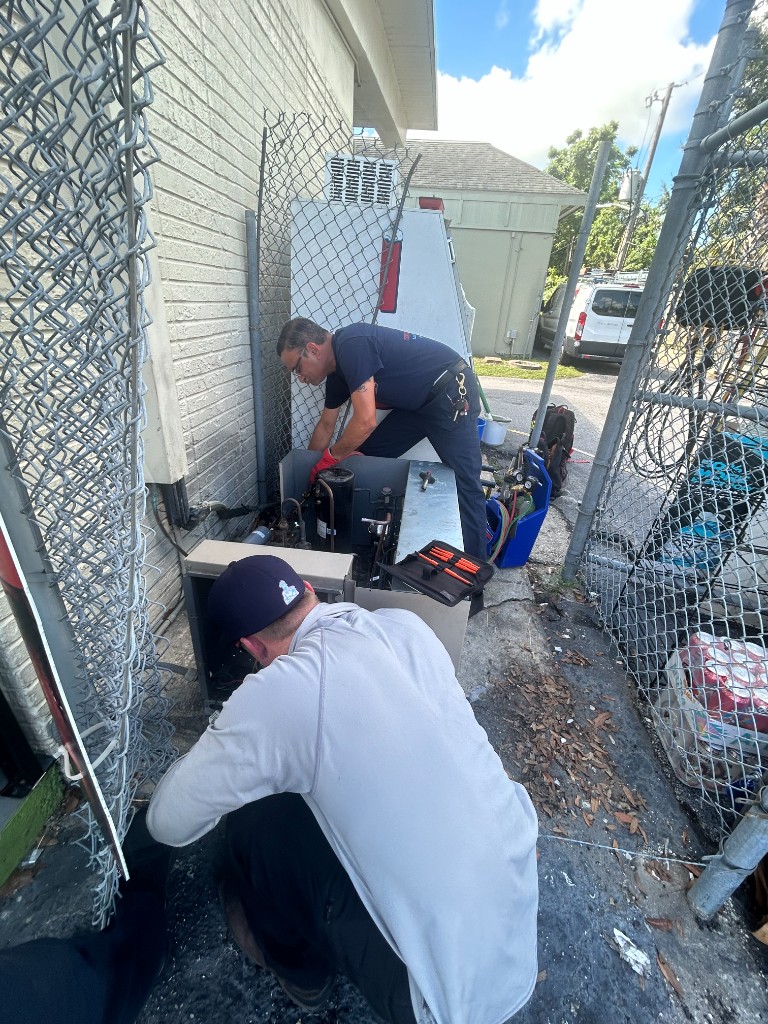
We believe deeply in the principle of integrity, which means providing clear, visual proof of your equipment's condition. During a professional inspection, technicians should capture photographic evidence showing the exact state of your condenser coils before and after cleaning. Seeing a photo of a heavily sludged coil—followed by the restored, clean aluminum—removes all the guesswork. Transparent diagnostics help business owners make informed, logical decisions about their maintenance budgets based on the actual condition of their rooftop, not a theoretical laboratory standard.
This level of professional care also requires a commitment to your operational needs. For instance, during a busy spring transition, one commercial client required comprehensive HVAC service for a dual-purpose business and residential property. They needed a team that could provide professional service and work around a very tight schedule without disrupting their daily operations. By going the extra mile to accommodate their timeline and providing transparent, visual proof of the required work, the customer's needs were completely satisfied. That is the standard of care required to properly maintain commercial investments.
Why Commercial Coil Cleaning Requires Specialized Expertise
When business owners realize their "maintenance-free" coils are actually filthy, the immediate temptation is often to send a maintenance staff member up to the roof with a hose. However, commercial coil cleaning is a highly complex process that requires specialized expertise. Attempting a DIY fix on modern microchannel coils is a fast track to destroying the unit.
Standard residential coil cleaners or hardware store foaming sprays are often highly acidic or alkaline. While they might work on older, thicker copper tubes, these harsh chemicals can severely corrode and eat through the ultra-thin aluminum used in modern commercial fins. Furthermore, using a high-pressure washer will instantly fold and flatten the delicate fins, permanently blocking airflow and ruining the coil completely. This is exactly Why We Advise Against DIY Coil Cleaning in any commercial setting.
Professional restoration requires specialized, non-corrosive treatments specifically formulated to dissolve baked-on grease and organic sludge safely, without reacting with the aluminum. Proper cleaning also frequently requires the partial disassembly of the RTU cabinetry by a licensed technician. The technician must access the interior side of the coils to push the debris outward; simply spraying the outside often just packs the dirt deeper into the center of the fin pack. Professional cleaning is the only way to safely restore the precise airflow dynamics the manufacturer originally intended.
Frequently Asked Questions About Commercial Condenser Coils
Are microchannel coils really maintenance free?
No, they are not completely maintenance-free. While their internal refrigerant loops are designed to be highly reliable and sealed, the exterior surfaces still require regular cleaning. Environmental debris like pollen, dust, and exhaust will accumulate on the closely spaced fins over time. Without professional cleaning, this buildup severely restricts airflow and forces your system to overwork, negating any efficiency gains the technology originally offered.
How often should commercial condenser coils be cleaned?
Most commercial rooftop units require thorough coil cleaning at least once or twice a year, depending on their location. Units located near heavy traffic, industrial exhaust, or commercial kitchens may require quarterly cleanings to prevent grease and sludge buildup. A professional inspection in the early fall is highly recommended to clear away the heavy accumulation from the summer cooling season.
What happens if you don't clean AC coils?
If you neglect to clean the coils, the system loses its ability to transfer heat effectively. This forces the compressor to run longer cycles at much higher pressures and temperatures. Eventually, this constant mechanical strain leads to skyrocketing energy bills and premature compressor failure, which is one of the most expensive repairs in commercial HVAC.
Do maintenance-free condenser coils exist?
Outside of a controlled laboratory environment, truly maintenance-free exterior coils do not exist. All outdoor HVAC equipment is subjected to organic debris, weather, and airborne particulates. While modern designs require less internal mechanical maintenance, the physical exterior of the unit must always be kept clean to ensure proper airflow and heat rejection.
Why do commercial AC coils get so dirty?
Commercial coils get dirty quickly because they act as massive air filters on your roof. High regional humidity acts as a sticky binder, catching seasonal pollen, dust, and smog. When combined with aerosolized grease from nearby restaurant vents or traffic exhaust, this mixture bakes in the sun to form a hardened sludge that clogs the fin spaces.
Can I use standard coil cleaner on a commercial RTU?
You should never use standard, off-the-shelf residential coil cleaners on a commercial unit. Many of these retail products contain harsh chemicals that can quickly corrode the thin aluminum fins found in modern commercial systems. Proper cleaning requires specialized, non-corrosive solvents applied by a professional to safely dissolve grease without damaging the metal.
Protect Your Commercial Equipment with Real-World Maintenance
The environmental realities of high humidity, sticky pollen, and airborne grease make professional care absolutely essential for your commercial HVAC systems, regardless of what a marketing brochure claims. The myth of the maintenance-free coil is dangerous precisely because it lulls property managers into a false sense of security, allowing hidden sludge to slowly strangle the system's efficiency and strain the compressor.
The logical proof is clear: a professional fall tune-up easily validates its own cost by restoring your system's efficiency and preventing catastrophic, unexpected breakdowns. Don't let summer's leftover grime dictate your equipment's lifespan. Take a proactive approach to your building's infrastructure by partnering with experts who understand the unique demands of our regional climate. Reach out to learn more about professional commercial maintenance options and ensure your rooftop units are truly prepared for the seasons ahead.