
The Hidden Impact of Ice Machine Upgrades on Hot Commercial Kitchens
Is your current ice machine the hidden reason your kitchen feels like a sauna? When an older unit finally gives out, upgrading commercial ice machines: air-cooled vs. water-cooled systems becomes a defining decision for your facility's operational health. In our years of servicing high-demand environments like Winter Haven restaurant kitchens, our team at Integrity Refrigeration & AC has found that this choice goes far beyond simply making enough ice for the dinner rush. You are actively deciding between the excessive heat exhaust of an air-cooled unit and the high municipal water consumption of a water-cooled unit.
Many facility managers treat an ice machine replacement as a simple appliance swap, but we always emphasize that it is fundamentally a facility-wide HVAC decision. A commercial kitchen operates as a delicate thermal ecosystem. Every piece of equipment generates heat, and the refrigeration cycle required to freeze hundreds of pounds of ice daily is one of the most intensive heat-generating processes in your building. Balancing these factors directly impacts ambient temperatures, staff comfort, and the overall workload on your building's primary cooling equipment.
If you choose a system that rejects too much heat into the room, your air conditioning will struggle to keep up, leading to a miserable working environment and skyrocketing utility bills. If you choose a system that relies entirely on municipal water for cooling, you might solve the heat issue but face heavy regulatory scrutiny and massive water usage rates. Understanding the mechanics behind both technologies is the only way to make a sustainable, long-term choice for your business. If you are evaluating how a new refrigeration unit will impact your facility, exploring comprehensive commercial air conditioning solutions is the first step toward a balanced, efficient kitchen.
Air-Cooled Ice Machines: Navigating the Heat Exhaust Dilemma
Air-cooled systems are the standard in many food service environments due to their straightforward installation and lower water utility footprint. Unlike their water-cooled counterparts, these machines do not require dedicated cooling water lines to function, making them much easier to integrate into existing kitchen layouts. However, understanding exactly how they manage the thermal energy they generate is an important prerequisite before committing to an upgrade.
The refrigeration cycle inherently moves heat from one place to another. To freeze water into ice, the machine must extract heat from the water and deposit it elsewhere. Here is how an air-cooled system handles that process:
- Drawing in ambient air: The machine uses an internal fan to pull surrounding room air across its condenser coils to cool the hot, high-pressure refrigerant flowing inside.
- Rejecting the thermal load: As the refrigerant cools and condenses, it releases thousands of BTUs (British Thermal Units) of heat directly into the immediate environment.
- Demanding strict clearance: To prevent the unit from suffocating in its own exhaust, manufacturers mandate specific spacing around the top, sides, and rear of the machine to ensure continuous airflow.
We frequently caution business owners that while the upfront cost advantages of air-cooled models are highly attractive, the operational reality of managing that rejected heat requires careful planning. If the machine is shoved into a tight corner or a poorly ventilated pantry, it will quickly overheat.
The Ripple Effect on Kitchen Ambient Temperatures
Commercial kitchens already face ambient temperatures significantly higher than dining areas due to ovens, fryers, grills, and continuous staff activity. When you introduce an air-cooled ice machine into this space, that rejected heat acts as a massive secondary heat load. This forces your existing AC units to work much harder just to maintain safe, tolerable kitchen temperatures for your staff.
Adding an air-cooled machine without proper airflow planning can severely reduce the machine's own ice production efficiency. The unit relies on the temperature of the incoming air to cool its condenser. If the room is already sweltering, the machine cannot shed heat effectively. In fact, our service calls consistently show that excessive ambient heat is a primary reason why commercial ice machine production drops when kitchens get too hot. The machine ends up recycling the very hot air it just expelled, leading to longer harvest cycles, softer ice, and accelerated wear on the compressor.
Water-Cooled Systems: High Efficiency, High Utility Usage
When our technicians evaluate facilities struggling with high indoor temperatures or cramped layouts, we often recommend water-cooled systems as a compelling alternative. Instead of blowing hot air into the room, these units use a continuous flow of water to carry heat away from the condenser. This fundamental difference in heat rejection mechanics completely changes how the machine interacts with your building's environment.
Eliminating ambient heat rejection: The most significant advantage of a water-cooled unit is its ability to keep the kitchen cooler. By transferring the thermal energy from the refrigerant directly into a water line that drains away out of the building, the machine adds virtually zero extra heat to your kitchen. This makes water-cooled units highly effective in tight, unventilated spaces where an air-cooled unit would quickly overheat and fail.
Reducing strain on the primary HVAC system: Because the ambient air temperature remains stable, your building's air conditioning system does not have to fight against a massive new heat load. This can extend the lifespan of your kitchen's AC equipment and reduce electrical consumption during peak summer months.
High municipal water consumption rates: The major drawback to this technology is the sheer volume of water required to maintain the cooling cycle. A standard single-pass water-cooled system—which runs cold municipal water past the condenser once before sending it straight down the drain—can use well over 100 gallons of water per 100 lbs of ice produced. For a high-capacity machine running continuously, this translates to thousands of gallons of water consumed every week solely for cooling purposes.
Navigating local regulations: Because of this intense resource usage, local environmental standards and guidelines from organizations like ENERGY STAR and the Department of Energy (DOE) often heavily regulate or restrict single-pass water-cooled systems. Many municipalities prohibit the installation of new single-pass systems entirely, forcing facilities to either use air-cooled units or invest in expensive closed-loop cooling tower systems. Facility managers must verify local municipal codes before committing to this route, as the long-term water utility costs can quickly offset any savings gained on the electrical side.
Side-by-Side Comparison: Matching the System to Your Facility
Deciding between these two technologies requires a clear understanding of your facility's specific constraints. A machine that works perfectly in a massive, well-ventilated warehouse might fail miserably in a compact restaurant kitchen. Use the comparison below to weigh the operational differences.
| System Feature | Air-Cooled Ice Machines | Water-Cooled Ice Machines |
|---|---|---|
| Upfront Investment | Generally lower purchase price and simpler installation process. | Higher initial cost, requiring dedicated plumbing and drainage setup. |
| Long-Term Utility Focus | Higher electrical usage (especially for the building's AC compensating for heat). | Significantly higher municipal water and sewer usage. |
| Spatial Requirements | Requires strict clearance on all sides for continuous airflow and ventilation. | Can be installed in tight, enclosed spaces without ventilation concerns. |
| Maintenance Focus | Frequent cleaning of air filters and degreasing of condenser coils. | Regular descaling of water lines and monitoring for mineral buildup. |
| Heat Rejection Impact | Rejects 100% of condenser heat into the surrounding room. | Transfers heat into the drain water, leaving the room temperature unaffected. |
Facility Prerequisites for Air-Cooled Systems:
- Adequate ventilation: The room must have enough cubic footage and air turnover to dissipate the exhausted heat.
- Strict clearance: You must have physical space to leave gaps around the machine per the manufacturer's specifications.
- Robust HVAC capacity: Your kitchen's air conditioning must be sized to absorb the additional thousands of BTUs generated daily.
Facility Prerequisites for Water-Cooled Systems:
- Accessible floor drains: The system requires continuous, high-capacity drainage capable of handling the high water output.
- Regulatory approval: You must confirm that local municipal codes permit the use of single-pass water cooling.
- Water quality management: Hard water environments will require aggressive filtration to prevent scale from destroying the internal heat exchanger.

Why Late-Season Humidity Amplifies the HVAC Strain
As our team performs early fall maintenance across Winter Haven, we see firsthand that subtropical climates mean any additional indoor heat generation creates a disproportionate strain on commercial HVAC systems. During September in Florida, the weather remains intensely hot and humid, sustaining a high AC load across the facility. This high late-summer humidity makes efficient indoor heat management absolutely critical for preventing excessive AC wear as we transition toward cooler months.
To understand why this matters for your ice machine, you have to look at how air conditioning actually works. An AC system removes two types of heat: sensible heat (the actual temperature reading on the thermostat) and latent heat (the moisture suspended in the air). When an air-cooled appliance rejects massive amounts of sensible heat into a highly humid kitchen, it forces both the ice machine and the primary AC to work overtime to remove moisture and heat simultaneously.
High indoor humidity acts as a dense thermal insulator. When the air is saturated with moisture, it becomes much harder for the ice machine's condenser coils to shed heat efficiently into that air. The machine's fan runs longer, the compressor works harder, and the internal components endure significantly more stress. At the same time, your kitchen's AC is battling the heavy latent heat load from the outdoor September air mixing with kitchen steam, plus the new sensible heat load from the ice machine.
This compounding thermal effect is why we strongly recommend proactive equipment care to handle peak loads without catastrophic failure. Scheduling routine cooling equipment maintenance ensures that your primary air conditioning can handle the added stress of commercial refrigeration equipment during the most demanding times of the year. Clean coils, optimized refrigerant levels, and strong airflow are the only defenses against the heavy burden of late-season humidity.
Evaluating Kitchen Layouts and Total Cooling Loads
Purchasing an ice machine in a vacuum often leads to buyer's remorse due to unforeseen utility spikes or severely overheated kitchens. A proper upgrade requires evaluating the facility as a whole, treating the new equipment as an integrated part of your building's thermal ecosystem. Relying on a professional layout assessment is the best way to prevent an expensive misstep.
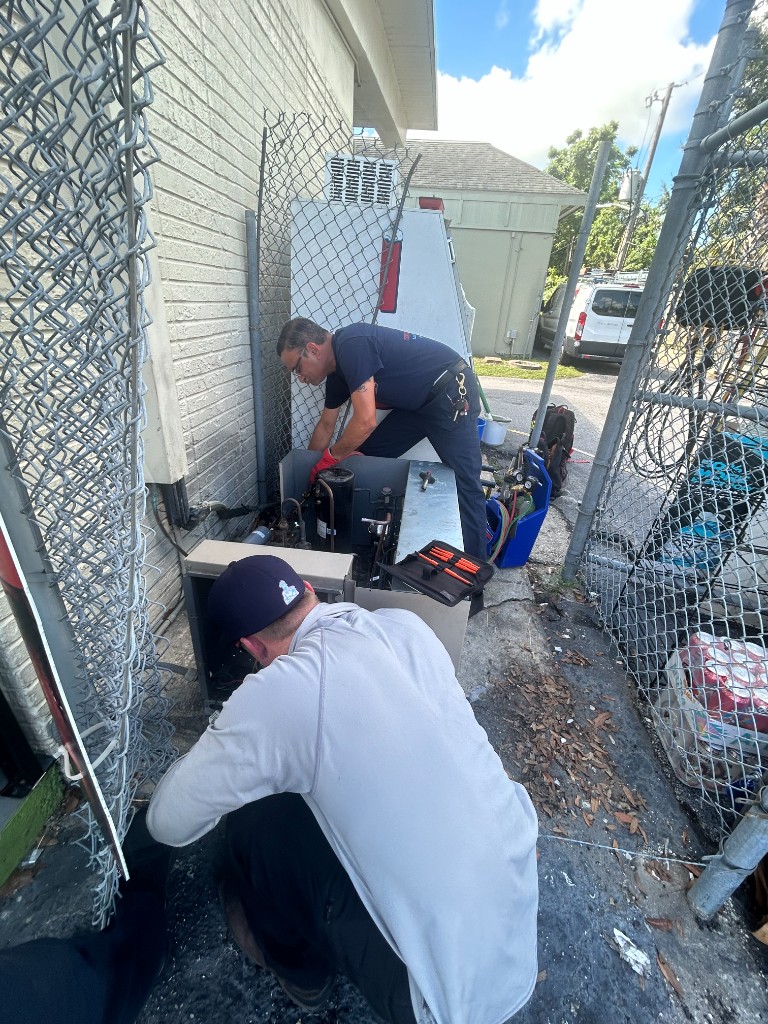
Recently, our team responded to a local customer who experienced a sudden cooling equipment failure after a third-party contractor failed to resolve the issue. Our technicians arrived within the hour, quickly diagnosed the underlying leak, sourced the exact parts needed, and fully restored the system before the indoor temperature became unbearable. We apply that exact same level of rapid, accurate diagnostic capability when assessing commercial facility layouts. A professional evaluation prevents emergencies before they happen by analyzing the environment beforehand.
The Professional Assessment Process:
- Calculating total heat rejection BTUs: Technicians determine exactly how much thermal energy a new air-cooled unit will add to the space based on its production capacity.
- Verifying adequate airflow: The proposed installation location is measured to ensure it meets the manufacturer's clearance requirements, preventing the machine from suffocating.
- Evaluating the existing HVAC load: The current air conditioning system is assessed to confirm it has the capacity to absorb the additional heat without failing during a dinner rush.
- Reviewing utility infrastructure: For water-cooled considerations, drain line capacity, municipal water pressure, and local code compliance are thoroughly verified.
Because Integrity Refrigeration & AC holds specialized dual expertise in both commercial HVAC and refrigeration, our technicians can accurately assess how a new ice machine will interact with your building's overall cooling system. If your facility assessment reveals that the existing AC cannot handle the exhaust from an air-cooled unit, we can help you look into a water-cooled model, reposition the equipment, or consider upgrading your primary equipment through professional cooling system installation in Winter Haven.
Frequently Asked Questions About Commercial Ice Upgrades
Which is better: an air-cooled or water-cooled ice machine?
Neither system is universally better; the right choice depends entirely on your facility's infrastructure. In our experience, air-cooled machines are generally preferred for their lower upfront costs and lower water usage, making them ideal for well-ventilated spaces. Water-cooled machines are better suited for cramped, hot kitchens where ambient heat rejection would overwhelm the room, provided the facility can handle the high municipal water consumption.
Why is my commercial ice machine making the kitchen so hot?
If you have an air-cooled ice machine, it naturally exhausts the heat it extracts from the water directly into the surrounding room. To freeze water, the refrigeration cycle absorbs thermal energy and uses a fan to blow that heat out across its condenser coils. If the room lacks proper ventilation or the building's AC is undersized, this rejected heat accumulates rapidly, turning the kitchen into a sauna.
Do water-cooled ice machines use a lot of municipal water?
Yes, single-pass water-cooled systems consume an exceptionally high volume of water. These units can easily use over 100 gallons of municipal water for every 100 pounds of ice they produce, as the water is used once to cool the condenser and then sent straight down the drain. Because of this heavy resource demand, many local municipalities strictly regulate or prohibit their installation in favor of more efficient alternatives.
How much clearance does an air-cooled ice machine need to operate efficiently?
Clearance requirements vary by manufacturer, but our team typically sees that most air-cooled units require at least 6 to 8 inches of unobstructed space on the top, sides, and rear. This gap allows the machine to pull in fresh ambient air and expel hot exhaust without recycling its own heat. Failing to provide this clearance will cause the unit to overheat, dramatically reducing ice production and damaging the compressor.
Can upgrading my ice machine reduce my restaurant's overall AC bill?
Yes, strategically upgrading your ice machine can lower your overall cooling costs. If you replace an old, inefficient air-cooled unit that is dumping excessive heat into your kitchen with a properly sized, well-ventilated modern unit, your primary HVAC system won't have to work as hard. Alternatively, switching to a remote-condenser system (where the heat is rejected outside the building) entirely removes that thermal load from your indoor AC.
Secure the Right Ice Machine System for Your Facility
The right choice for your upgrade ultimately balances upfront utility capabilities with long-term kitchen comfort and HVAC health. A regionally-aware breakdown of these operational factors leads to a smarter, more efficient equipment upgrade that supports your entire staff. By evaluating your specific layout, utility constraints, and ambient temperatures, you can avoid costly missteps and ensure your new equipment performs reliably. Reach out to our team at Integrity Refrigeration & AC for a professional assessment to weigh your options accurately and secure the best ice machine system for your commercial facility.